Why Komodo is different

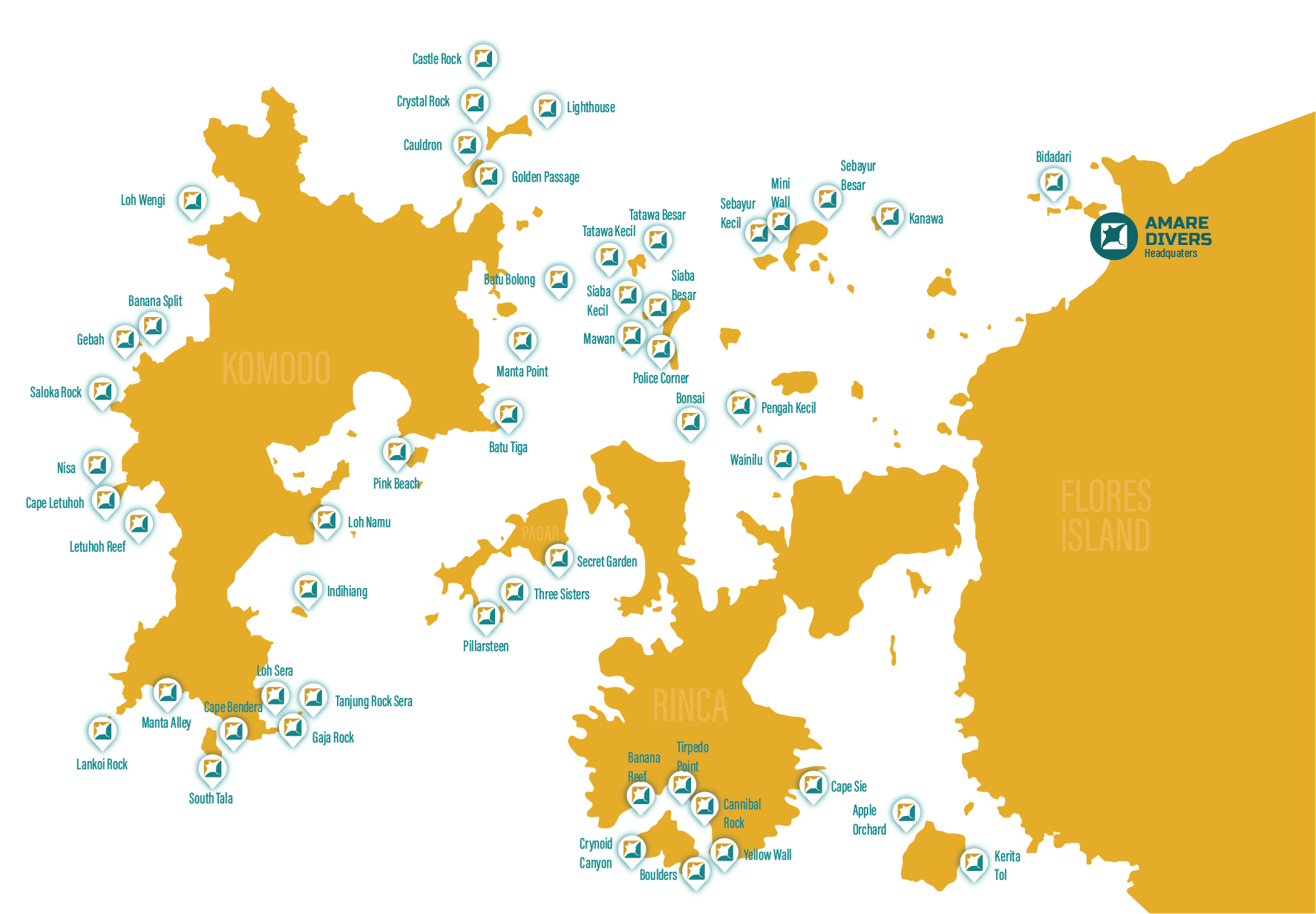
Two oceans meet here. The cold, nutrient-rich water of the Indian Ocean pushes up from the south; warmer Pacific water sweeps down from the north. Where they collide — in the channels around Komodo and Rinca — you get the most biodiverse reefs in the world.

That mix is what brings the mantas and the macro, the sharks and the soft coral gardens, sometimes on the same dive.

1,000+

Species of Fish

260

Species of Hard Coral

70+

Named Dive Sites

3

Distinct Dive Regions
(North, Central, South)

Marine life highlights

Manta rays at Karang Makassar, reef sharks at Castle Rock, frogfish and nudibranchs at Wainilu, eagle rays at Batu Bolong, and seasonally
— mola mola in the south.

See full marine life list →

Conservation

The park is protected, but protection is something you do, not something you have. We run our own coral restoration programme, follow strict no-touch briefings, and pay the park fees that fund ranger patrols. If you want to do more on your trip — join the restoration dive.

Coral restoration programme →

When to dive

Year-round. April to November is dry season and peak. December to March is wet — fewer crowds, slightly cooler water in the south, and often the best macro of the year. We dive every day except when wind or sea state actually shuts it down.

Full weather & season guide →

Dive Komodo with us