
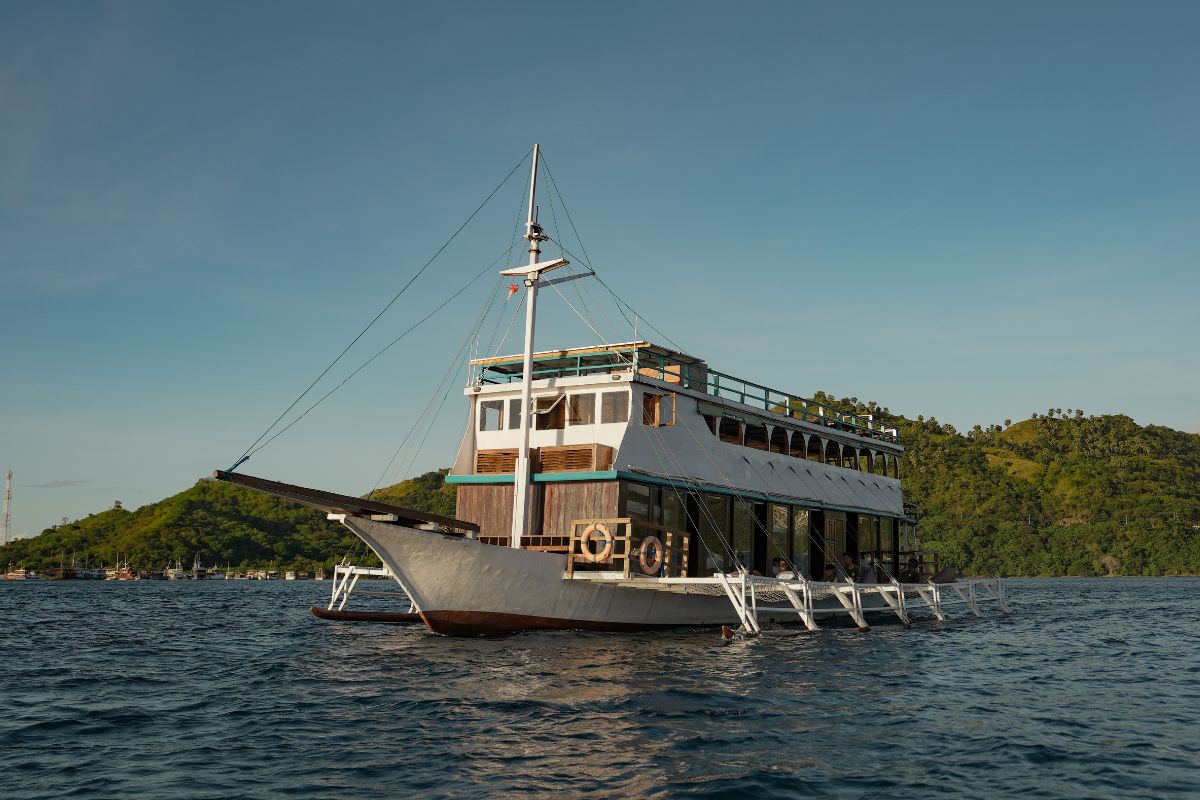
Many divers wonder what a true Komodo liveaboard experience actually feels like. While specifications like boat size and cabin count are important, the real value lies in the day-to-day rhythm of exploring the national park. Whether you are a novice or a seasoned diver, understanding the Komodo liveaboard experience will help you prepare for the trip of a lifetime.
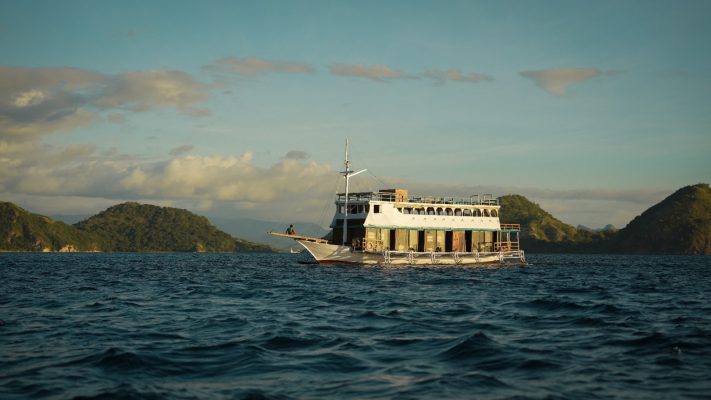
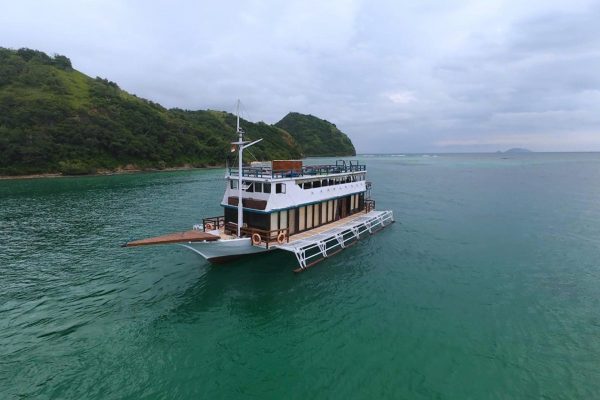
Most questions we get about Maria Seascape come down to one thing: what is it actually like? The spec sheet says 26 metres, 4 AC cabins, 10 guests, up to 13 dives. That tells you what the boat has. It doesn’t tell you what a trip feels like.
This is a day-by-day account of a 4-day Maria Seascape departure — the standard itinerary that covers north and south Komodo. If you’re deciding between a liveaboard and a couple of day trips, this should give you a clear picture of the difference.
Day 0: Departure Evening
Boarding is at Labuan Bajo harbour, typically early evening. Guests arrive, get shown to their cabins, meet the crew, and receive an orientation briefing covering safety, dive schedules, and what to expect over the next four days.
Maria Seascape has four cabins: two double cabins, one twin cabin, and one triple cabin. Each has air conditioning, a private bathroom with hot shower, and enough storage for your gear. The cabins are not hotel-sized — this is a working dive boat — but they’re functional and comfortable for four days.
Dinner is served on board. The boat departs Labuan Bajo harbour after dinner and anchors overnight near the first dive sites, putting you on the water first thing in the morning.
Day 1: The North Komodo liveaboard experience – Batu Bolong and Castle Rock
05:30. Coffee is out. The boat is anchored somewhere in north Komodo — usually Gili Lawa or near Batu Bolong — and you can see the Komodo silhouette in the early light. This is the part of a liveaboard that day trips cannot replicate: first light at the site, before the crossing boats arrive from Labuan Bajo.Starting your morning at a dive site, well before the day-trippers arrive, is the true highlight of the Komodo liveaboard experience.
07:00. Briefing on deck. The divemaster covers current direction, entry method, depth profile, what you’re likely to see, and hand signals. For Batu Bolong, the briefing covers how the fish life stacks on the current side and when to move to the lee side if the current builds.
07:30. First dive. Batu Bolong’s wall is covered in sea fans. The current brings fusiliers and surgeonfish in dense schools. Reef sharks work the base. You drift the current side, move to sheltered water when needed, and ascend slowly along the wall. 50 minutes underwater.
09:00. Back on board. Log the dive. Surface interval on deck — snacks out, coffee still available. Second dive at 10:30, often a second pass at Batu Bolong or a move to a nearby structure.
12:30. Lunch while the boat repositions north toward the Gili Lawa channel. Afternoon dive at Castle Rock if conditions allow — the channel site with hammerheads and sharks on its best days. Third dive at 14:30.
17:00. The boat anchors for the night somewhere near the north sites. Sundeck time. You can watch the Komodo hills go dark from the top deck with a drink. Dinner at 18:30.
Day 2: North Komodo — Crystal Rock and Manta Point
Every guest has a different pace, but the beauty of a Komodo liveaboard experience is the ability to relax between dives and recharge for the next challenge.
Second day follows the same rhythm but different sites. Crystal Rock is across the channel from Castle Rock — similar exposed pinnacle with cold upwellings. Morning dive there in early slack current before the flow builds.
Afternoon moves to Manta Point on the south coast of Rinca Island. This is the cleaning station dive — mantas hovering at 5 to 15 metres while cleaner wrasse work them. We brief guests before entry: maintain distance, no chasing, neutral buoyancy and patience. This is not a guaranteed encounter but the station is active through July and August.
Optional night dive on day two, depending on itinerary and guest preference. Night dives at sheltered sites near the boat’s anchor position — torch-lit, macro life, octopus, nudibranchs, sleeping fish.
Day 3: Overnight Crossing — North to South Komodo
This is the logistical feature of the 4-day itinerary that makes it different from a day trip or a 2-day liveaboard. After the last north Komodo dive on day two, the boat crosses overnight south toward Komodo Island. You sleep through the crossing. You wake up in south Komodo. While the macro life is stunning, the overall Komodo liveaboard experience also encompasses the thrill of drifting through current-swept pinnacles.
Morning of day three: Manta Alley. This is an open water channel dive — mantas in free water, often in larger groups, less predictable in location than Manta Point. The experience is different: you’re chasing current, scanning the blue water, and waiting for the shapes to appear. At its best, it’s the most striking dive of the trip.
Afternoon: Cannibal Rock, in the sheltered bay on Rinca’s south coast. Cannibal Rock is pure macro. The structure is carpeted in tunicates, crinoids, sea apples, and invertebrates. Hairy frogfish, ghost pipefish, pygmy seahorses. You do one area of two square metres for 60 minutes and still miss things.
Day 4: South Komodo — Three Sisters and Return
Final morning: Three Sisters or Pillarsteen, depending on conditions. These are deep pinnacle sites with schooling fish aggregations and consistent manta activity during peak season. The 4-day itinerary covers more ground than any other format — north and south within the same trip.
Lunch on board. The boat begins the return to Labuan Bajo in the afternoon. Arrival in harbour early to mid-afternoon on day four. Bags packed, dives logged, gear rinsed. The trip ends back at the dock.
What’s Included and What Isn’t
Included in every Maria Seascape departure: all dives (up to 13 on a 4-day), all meals (breakfast, lunch, dinner, snacks on deck), AC cabin with private bathroom, tanks, weights, the Komodo National Park permit, and transfers from Labuan Bajo harbour.
Not included: personal dive insurance, dive equipment rental (available on request), alcoholic drinks, and anything purchased in Labuan Bajo before or after the trip. No surprises on board.
Who Is This Trip For?
For those seeking the ultimate underwater adventure, the Komodo liveaboard experience offers access to sites that day-trippers simply cannot reach.
The 4-day itinerary is best suited to Open Water certified divers with at least some experience — a few dozen dives, some experience with current, comfortable with multiple dives per day. Advanced Adventurer is recommended to access the full site list including Castle Rock, Crystal Rock, and the deeper south Komodo pinnacles.
If you’re newly certified and want to do a Maria Seascape trip, the 2-day north Komodo itinerary is a more appropriate starting point. It covers Batu Bolong and Manta Point — the most accessible sites — without putting you on the demanding channel dives.
Frequently Asked Questions
How many dives per day on a Maria Seascape trip?
Typically 3 dives per day — morning, midday, afternoon — with an optional night dive on selected evenings. 4-day trips can reach up to 13 total dives including night dives. 3-day trips average 9 dives. 2-day trips cover 6 dives.
Is the food good on board?
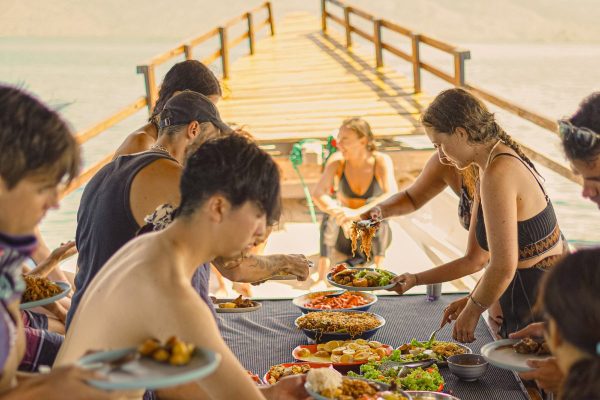
Three meals per day plus snacks during surface intervals. The menu covers Indonesian and Western food. Diet requirements (vegetarian, gluten-free, allergies) can be accommodated – let us know before boarding.
Is it suitable for solo travellers?
Yes. A significant portion of Maria Seascape guests are solo travellers. The boat holds 10 guests across 4 cabins. You’ll be sharing the space with other guests for 4 days, so the social dynamic matters. Most guests find it a positive experience.
What if I get seasick?
The overnight south Komodo crossing is the longest open-water passage on a 4-day trip. Take seasickness medication before departure. Stugeron or Dramamine taken 30 to 60 minutes before a rough passage work well. Stay on deck and look at the horizon if you feel unwell below.
Can I do the trip if I’m only Open Water certified?
On the 2-day and 3-day north Komodo itinerary, yes — with the understanding that some sites will be swapped for calmer alternatives if current conditions are strong. For the 4-day south Komodo itinerary, Advanced Adventurer is strongly recommended for the full site experience.
If you want more detail on a specific itinerary or departure date, send us a message on WhatsApp and we’ll send you the full schedule and what’s available.
Ultimately, choosing the right vessel is vital, but the Komodo liveaboard experience remains a unique adventure that combines comfort, world-class diving, and the raw beauty of Indonesia’s national park.

