


Every diver comes to Labuan Bajo asks the same question: which Komodo dive sites are actually worth visiting? There are over 50 named dive sites across Komodo National Park and the surrounding waters. Most are good. A handful are exceptional. And a few require specific conditions, experience levels, or logistics to dive at their best.
This guide covers the sites Amare Divers runs regularly — the ones we know well enough to brief honestly, not just describe from a brochure. North Komodo sites are accessible on day trips from Labuan Bajo. South Komodo requires a liveaboard.
North Komodo: Best Dive Sites in Komodo for Day Trips
These sites are accessible from Labuan Bajo on a day trip. The crossing takes between 1.5 and 2 hours depending on the site and weather. North Komodo gets the strongest current-driven upwellings, which is why the marine life density here is exceptional.
Batu Bolong Diving
A single volcanic pinnacle rising from 30 metres to just below the surface. The wall is covered in sea fans and soft coral. Current pushes nutrients past continuously — which means fish life stacks up on the structure in numbers that catch most divers off guard on their first visit. Fusiliers, surgeonfish, batfish, sweetlips, and consistent reef shark activity at the base.
This is Komodo’s most photogenic dive and the site we recommend to almost everyone. It works for Open Water certified divers on calmer current days, and it rewards experienced divers on stronger current days when the fish stacking is most dense. It’s our most common day trip stop.
Castle Rock Komodo
A submerged seamount in the Gili Lawa channel, exposed to open-water current from multiple directions. At its most productive, Castle Rock delivers schooling hammerhead sharks, grey reef sharks, white-tip reef sharks, giant trevally, Napoleon wrasse, and tuna — all on the same dive.
At its most challenging, the current can reach 3 to 4 knots and visibility reduces with plankton. Castle Rock is not a site for inexperienced divers. Advanced Adventurer certification and genuine current diving experience are the right entry requirements here. We include Castle Rock in day trip itineraries when conditions are appropriate for the group.
Crystal Rock
Crystal Rock sits directly across the channel from Castle Rock and shares similar characteristics to other top Komodo dive sites — exposed pinnacle, strong current, and dense fish life. The two sites are often dived in sequence on the same day trip.
Crystal Rock often produces cold upwellings that drop water temperature noticeably within a single dive profile. A 5mm wetsuit is not excessive here even in July. The structure itself has more plate and table coral than Castle Rock, and the fish life tends to be slightly more concentrated at the peak of the current cycle.
Manta Point Komodo
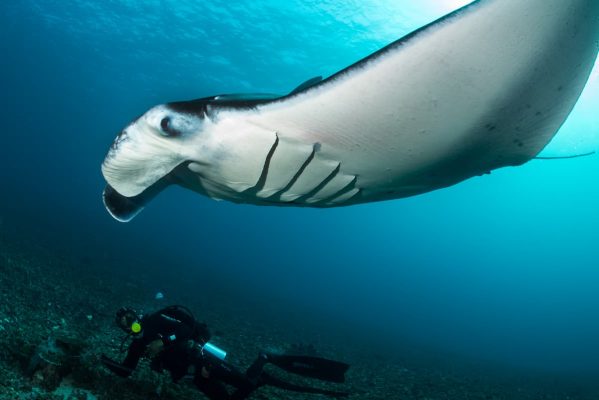
A shallow cleaning station on the south coast of Rinca Island, inside Komodo National Park. Mantas arrive to be cleaned by cleaner wrasse at the pinnacles between 5 and 15 metres. At its best — which historically means April through November — multiple mantas work the cleaning station simultaneously while divers hover in neutral buoyancy and watch.
No sighting guarantees. These are wild animals moving between different Komodo dive sites, but mid-year is historically the most reliable window at this specific spot. We include Manta Point in day trip itineraries during manta season when current conditions make the site diveable.

South Komodo Dive Sites: Liveaboard-Only
South Komodo sites are 4 to 6 hours from Labuan Bajo by boat. They are not accessible on a standard day trip. You need a liveaboard that anchors overnight to make the crossing and dive them without spending all your time travelling.
Manta Alley
Manta Alley is Komodo’s other primary manta site, in the south near Komodo Island. It’s a channel dive rather than a cleaning station — mantas use the current flow through the channel. Encounters here tend to be with mantas in open water, often in larger groups than Manta Point, but less predictable in location within the dive.
If Manta Point is the controlled cleaning station encounter, Manta Alley is the open water chase. Both are worth doing on the same trip. The Maria Seascape 4-day itinerary includes both.
Cannibal Rock
One of the most biodiversity-dense dives in Indonesia, and one that is genuinely unusual even by Komodo standards. Cannibal Rock sits in Horseshoe Bay on the south coast of Rinca Island, in relatively sheltered water. The structure is heavily encrusted with tunicates, nudibranchs, sea apples, and an unusually high density of macro life.
Cannibal Rock dives slowly. You spend 60 minutes on a small area because there is too much to see. Hairy frogfish, ornate ghost pipefish, pygmy seahorses, and cuttlefish are consistent finds here. This is the dive macro photographers come to Komodo specifically for.
Three Sisters & Pillarsteen
Three Sisters is a series of three pinnacles in the south, recognized as some of the most unique Komodo dive sites for hard coral coverage. Pillarsteen is a nearby site known for its schooling fish aggregations and manta activity during peak season. Both are deep enough (portions below 30 metres) to require Advanced Adventurer certification at minimum.
Sites Near Labuan Bajo (Outside Komodo National Park)
Several good dive sites sit just outside the Komodo National Park boundary, close to Labuan Bajo. These can be reached in 15 to 30 minutes and do not require paying the Komodo National Park daily fee.
Sebayur: a reef system with good coral coverage, small fish life, and conditions suitable for beginners and snorkellers. Bidadari: a wall and reef site used for night dives, with excellent macro life after dark. Both sites feature in the Coral Kalong evening trip — afternoon reef dive at Sebayur, sunset at Kalong Island, night dive at Bidadari.
What Experience Level Do You Need?
Open Water certified: Batu Bolong (calm current days), Manta Point, Sebayur, Bidadari, most day trip sites in moderate conditions.
Advanced Adventurer: Castle Rock, Crystal Rock, Three Sisters, Pillarsteen, and any challenging Komodo dive sites where conditions involve strong current or deeper profiles.
Experienced drift divers: Full Castle Rock and Crystal Rock in peak current. Not recommended for divers who haven’t managed current diving before.
Day Trip vs Liveaboard: Which Sites Can You Reach?
Day trips from Labuan Bajo cover north Komodo — Batu Bolong, Castle Rock, Crystal Rock, and Manta Point on appropriate days. They are the right format for 2 to 3 dives per day if you have limited time or are sampling Komodo before committing to a longer trip.
A liveaboard is the only practical way to dive south Komodo — Manta Alley, Cannibal Rock, Three Sisters, Pillarsteen — within the same trip. The Maria Seascape 4-day itinerary is designed specifically to combine north and south Komodo into a single trip.
Frequently Asked Questions
How deep are Komodo dive sites?
Most productive dive activity across these Komodo dive sites happens between 5 and 30 metres. Batu Bolong’s most interesting zone is 10 to 25 metres. Castle Rock has a peak zone at 20 to 30 metres. Cannibal Rock is mostly 10 to 25 metres. Night dives at Bidadari are typically 8 to 18 metres.
Do you need a divemaster for Komodo diving?
Yes. Komodo National Park requires guided diving. All sites on Amare Divers day trips and Maria Seascape liveaboard departures are guided by certified divemasters or SSI instructors. Maximum 4 divers per guide. Sign here.
What is the visibility like at Komodo?
North Komodo dry season (May–October): typically 15 to 30 metres on good days. Castle Rock and Crystal Rock can drop with plankton blooms when current is running. South Komodo: slightly lower average due to more nutrient-rich water, typically 10 to 20 metres in peak season.
Can I dive Komodo if I’ve never dived in strong current before?
Some sites are accessible to divers without current experience — Batu Bolong on calmer days, Manta Point, and sites in the south Komodo bay area. For Castle Rock and Crystal Rock, prior experience with current diving is genuinely important. Tell us your experience level when you book and we’ll put you on the right sites.
Which Komodo site is best for manta rays?
Manta Point (central Komodo, accessible on day trips) for cleaning station encounters April through November. Manta Alley (south Komodo, liveaboard only) for open water encounters during the same season. July and August are historically the most consistent months at both sites. No sighting guarantees.
Not sure which sites or trip format makes sense for your level? Send us a message on WhatsApp with your certification and target experience. We’ll give you a straight answer.

