
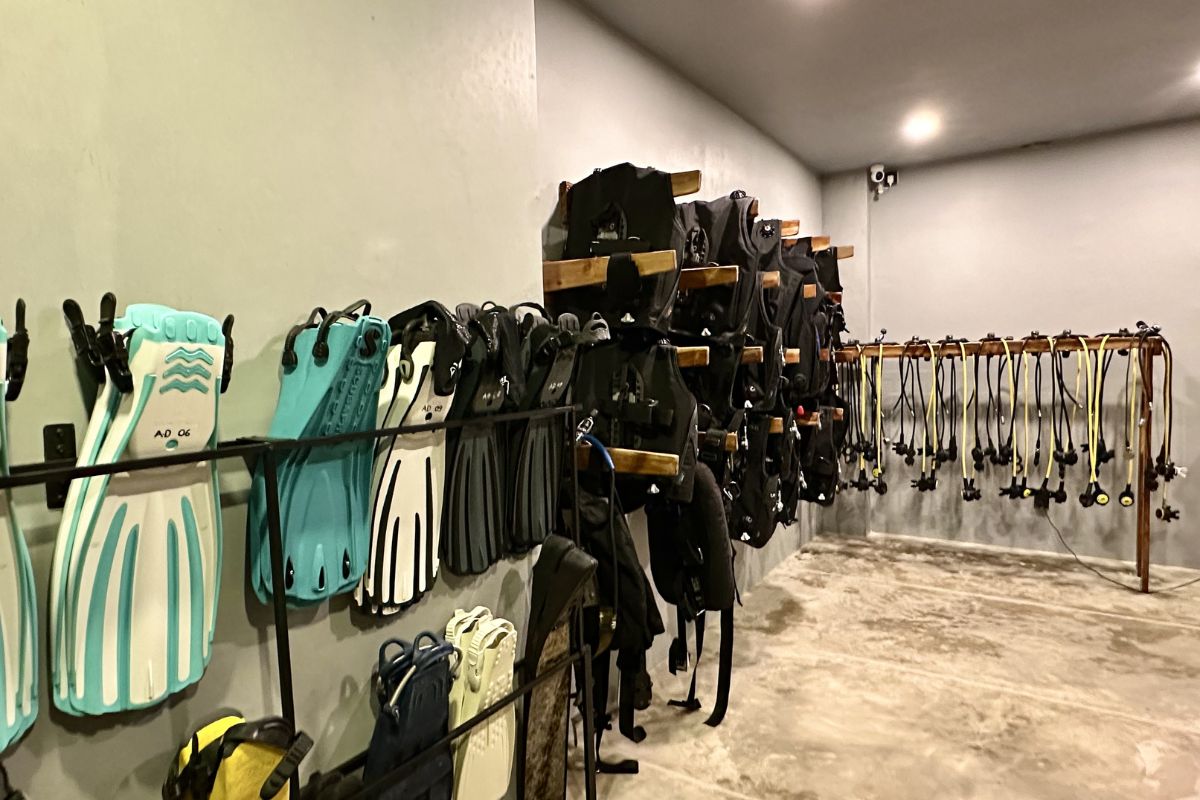
Packing for a liveaboard dive safari is an entirely different beast than packing for a standard land-based resort trip. The boat will be your home for anywhere from two to four days. Space in your cabin is limited, and the reality is that you will spend the vast majority of your time either in the water, preparing to get in the water, or drying off from the water.
If you are planning an adventure to the heart of Indonesia’s most famous national park, you need a precise Komodo liveaboard packing list. After running countless dive trips through these current-swept islands, we know exactly what actually matters to bring—and what just takes up valuable space for no reason.
This comprehensive guide will detail what to bring on a Komodo liveaboard, focusing heavily on essential Komodo liveaboard gear, clothing, and travel practicalities. Whether you are navigating the deep waters of Castle Rock or searching for mantas, this guide ensures you are perfectly prepared.
1. The Golden Rule of Liveaboard Luggage
Before we dive into the specific items on your Komodo liveaboard packing list, we need to talk about the bags themselves. Space on any dive vessel is a premium commodity. Every bag that isn’t yours is someone else’s problem, and massive rolling suitcases are the enemy of a comfortable cabin.
When deciding what to bring on a Komodo liveaboard, start with a soft-sided duffel bag or a large travel backpack. These can be easily unpacked and then folded flat to slide under your bunk or into a small closet. Hard-shell cases do not collapse, meaning they will permanently occupy a portion of your walking space for the duration of the trip.
If you have excess luggage that you do not need for the boat journey, leave it behind. We highly recommend leaving large, non-essential suitcases at your hotel or in a secure storage room at the dive center in Labuan Bajo before you board.
2. Scuba Equipment: Your Komodo Liveaboard Gear
The core of any dive trip is the equipment. When considering your Komodo liveaboard gear, you must balance comfort, safety, and luggage weight. The currents in Komodo National Park are legendary, meaning your equipment needs to be reliable.
Here is a breakdown of what the boat provides versus what you must include on your personal Komodo liveaboard packing list.
What the Boat Provides
-
Tanks: 12L aluminium cylinders, reliably filled between dives.
-
Weights and Weight Belts: Standard lead weights.
-
Completed Dive Equipment: Available on request if you do not own your own Komodo liveaboard gear.
What to Bring Yourself (Highly Recommended)
While rental gear is available, bringing your own primary Komodo liveaboard gear transforms a good trip into a great one.
-
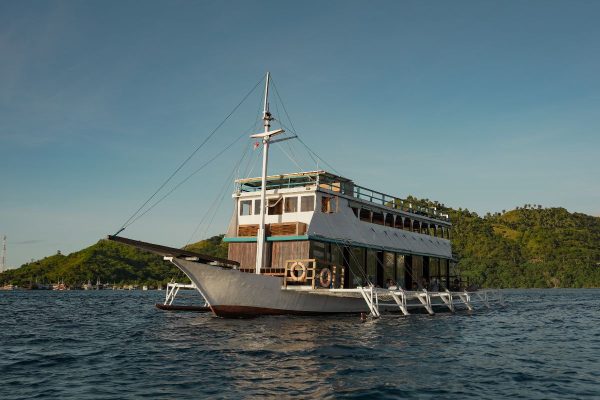
Mask and Fins: Rental masks exist on the boat, but they are rarely as comfortable as your own perfectly fitted mask. If you are spending 45 to 60 minutes underwater per dive, a leaking mask will ruin the experience. Furthermore, stiff blade fins are highly recommended over split fins for navigating Komodo’s strong currents.
-
Dive Computer: Komodo dive sites involve massive depth variations and sometimes back-to-back dives with short surface intervals. You must manage your own dive profiles. Never rely on a shared or rental computer when diving multiple times a day.
-
SMB (Surface Marker Buoy): This is absolutely mandatory and a non-negotiable part of your Komodo liveaboard packing list. Sites like Castle Rock, Crystal Rock, and Manta Alley can drift you a long way from the main boat. Bring an inflatable SMB and a spool, and practice deploying it.
-
Torch or Dive Light: Useful for peering under coral overhangs and essential for any scheduled night dives.
-
Dive Knife or Shears: Some areas of the ocean unfortunately have fishing net debris. Small trauma shears are lighter, safer, and easier to access in an emergency than a large dive knife.
-
Signalling Mirror or Whistle: Secondary safety signalling devices for surface situations. They are incredibly small, lightweight, and absolutely worth carrying.
Gear Comparison Summary
| Equipment Type | Bring Your Own? | Priority Level | Reason |
| Mask | Yes | Critical | Prevents leaking and fogging issues; ensures comfort. |
| Fins | Yes | High | Personal fins prevent blisters; stiff fins handle currents better. |
| Dive Computer | Yes | Critical | Personal safety and accurate multi-dive tracking. |
| SMB | Yes | Critical | Essential for safe surface pickups in drift dives. |
| BCD & Regulator | Optional | Medium | Bring for familiarity, or rent to save luggage weight. |
| Wetsuit | Yes | Medium | A personal 3mm full suit ensures proper thermal protection. |
3. Clothing & Sun Protection Essentials
When figuring out what to bring on a Komodo liveaboard in terms of clothing, the rule is simple: less is more. Komodo is not complicated. You are not dressing for dinner at a luxury resort; you are dressing for comfort, salt, and sun.
You will likely wear a rashguard for most of the day, your wetsuit during dives, and something incredibly light and breathable in the evenings. Do not overpack clothing on your Komodo liveaboard packing list.
The Daily Uniform
-
Rashguards and Swimwear: You will live in these. Bring two or three pairs of swim shorts or swimsuits so you can rotate them while the others dry. A long-sleeve UV rashguard is vital for surface intervals on the sun-drenched deck.
-
Light Long-Sleeve Layer: Komodo nights can be surprisingly cool, particularly if you have been diving in cold upwelling water all day. A thin fleece or a light long-sleeve shirt is perfectly sufficient.
-
Minimal Footwear: Flip flops are the only footwear you need on board. In fact, most of the time, bare feet are preferred. Heavy walking shoes are entirely unpractical on a working dive boat unless you plan specific land excursions.
Sun Protection Strategy
-
Reef-Safe Sunscreen: This is a vital component of your Komodo liveaboard packing list. You must use mineral-based sunscreen (containing zinc oxide or titanium dioxide) rather than chemical sunscreens. Chemical sunscreens bleach coral. Komodo National Park rangers actively monitor environmental impacts, and protecting the reef is a core responsibility of every diver.
-
Polarized Sunglasses: The glare off the ocean is intense. Polarized lenses will protect your eyes and actually help you spot manta rays feeding near the surface from the deck of the boat.
-
Wide-Brimmed Hat: A full-brim hat is significantly better than a standard baseball cap for blocking the harsh side-sun while sitting on the dive deck or riding in the tender.
4. Toiletries, Health & Seasickness
Your health and comfort are paramount. The crossing from Labuan Bajo into the heart of the national park can occasionally be choppy, and being stuck on a boat without basic medical comforts is miserable. Add a small, personalized first-aid and toiletry kit to your Komodo liveaboard packing list.
Managing Seasickness
The crossing from Labuan Bajo to the northern sites takes roughly two hours. In peak dry season (June to September), the southeast swell is manageable, but the ocean is rarely perfectly flat. The boat will move.
-
Medication: Take medication before departure. Do not wait until you feel ill. Dramamine, Stugeron, or Scopolamine patches work best when applied or taken 30 to 60 minutes before the boat leaves the harbor. We also have onboard in case if you need.
-
Ginger Tablets: For those who prefer natural remedies or suffer from very mild motion sickness, ginger tablets are a great addition to your Komodo liveaboard packing list as they cause no drowsiness.
-
Hydration: Avoid excessive alcohol the night before your trip. Dehydration severely exacerbates motion sickness.
Toiletries & Basic First Aid
-
Travel-Sized Toiletries: Fresh water on the boat is available but it is not unlimited. Decant your favorite shampoo and body wash into small, reusable travel bottles. Ensure they are biodegradable if possible.
-
Ear Care: “Swimmer’s ear” is common on multi-day dive trips. Bring prophylactic ear drops (a mix of white vinegar and rubbing alcohol) to use after your last dive of the day to keep your ear canals dry and infection-free.
-
Basic Medications: Include standard painkillers (ibuprofen/paracetamol), antihistamines, and basic bandages in your Komodo liveaboard gear. The boat has an emergency first aid kit, but having your own basic supplies is much more convenient.
5. Electronics & Underwater Photography
Komodo is a world-class destination for underwater photography. Whether you are shooting macro subjects like nudibranchs or wide-angle shots of passing mantas, knowing what to bring on a Komodo liveaboard for your camera setup is key.
Camera Gear Essentials
-
Underwater Camera and Housing: If bringing a dedicated rig, pack spare batteries, a reliable charger, and microfiber cleaning cloths for your dome ports.
-
GoPro & Action Cameras: A GoPro is incredibly easy to manage on a liveaboard compared to a massive DSLR rig. Bring a wrist mount or a mask mount to keep your hands completely free while dealing with Komodo’s legendary drift dives.
-
Red Filters: If you are not using heavy video lights, a red filter for your GoPro will help bring the color back into your footage at depth.
Power and Charging
-
Power Banks: Cabin power is usually reliable, but having a high-capacity power bank is highly useful during surface intervals when you want to charge devices on the main deck.
-
Universal Adaptors: Indonesia uses the European standard two-round-pin outlet (Type C/F). The Maria Seascape runs on a 220V system. If you are traveling from the US, the UK, or Australia, an international plug adaptor is a mandatory item on your Komodo liveaboard packing list.
6. Crucial Documents & Insurance
You cannot board the boat or enter the national park without the proper paperwork. Have these documents ready and accessible in a waterproof dry bag before you step foot on the vessel.
Essential Paperwork
-
Certification Cards: Bring your physical SSI or PADI certification card, or ensure you have the digital version downloaded on your phone (e.g., the SSI MyApp or PADI App) for offline viewing. Your maximum depth limits will be checked.
-
Dive Log: Whether you keep a beautifully stamped physical logbook or use the digital logbook function on your dive computer, bring proof of your recent dive history.
-
Passport: A copy of your passport is required to register for the official Komodo National Park entry permits.
Dive-Specific Insurance
Do not overlook this crucial aspect of your Komodo liveaboard packing list. Standard travel insurance policies almost always exclude scuba diving, especially diving deeper than 18 meters.
You must carry dedicated dive insurance from a trusted provider like DAN (Divers Alert Network) or DiveAssure. These policies specifically cover hyperbaric chamber treatments (recompression), emergency medical evacuations from remote boats, and diving-related medical costs. Check your coverage before you leave home, not after you arrive in Labuan Bajo.
7. What NOT to Pack on Your Trip
Knowing what to bring on a Komodo liveaboard is only half the battle; knowing what to leave behind is just as important. Every inch of space matters. Here is the ultimate “Anti-Packing List” for your trip.
-
Massive Rolling Suitcases: As mentioned earlier, they do not fit under bunks. Use a soft duffel bag.
-
Excessive Evening Wear: You will likely wear the exact same comfortable t-shirt and shorts three evenings in a row, and absolutely no one will care. You are on a working dive boat, not a luxury gala. Pack a maximum of one change of dry clothes per day.
-
Hair Dryers or Heat Styling Tools: There is no outlet space for high-wattage heat tools, and the boat’s generators may not support them. More importantly, there is no practical use for them. Messy, salty hair is the official aesthetic of a dive safari.
-
Irreplaceable Valuables: Leave expensive jewelry, massive laptops you don’t need for work, and irreplaceable family heirlooms at home or in a hotel safe. Boats, salt water, and deep oceans are not a good combination for luxury items.
-
Heavy Books: While reading on the sun deck is lovely, heavy hardback books take up weight. Bring a Kindle or an e-reader instead.
8. A Note on Maria Seascape Cabin Space
When visualizing your Komodo liveaboard packing list, it helps to understand exactly where you will be living.
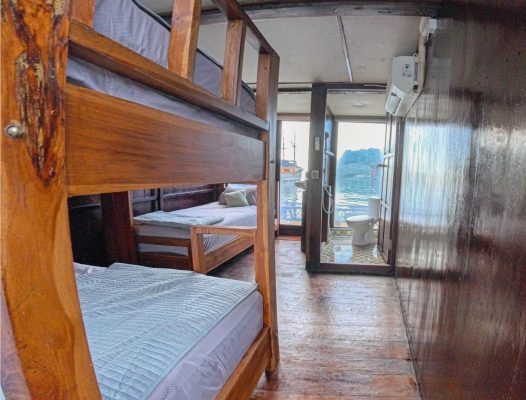
The Maria Seascape features four comfortable, air-conditioned cabins. Cabins 1 and 2 can each accommodate up to 3 guests (or 4 for private group charters), while Cabins 3 and 4 are double rooms. All cabins feature private ensuite bathrooms.
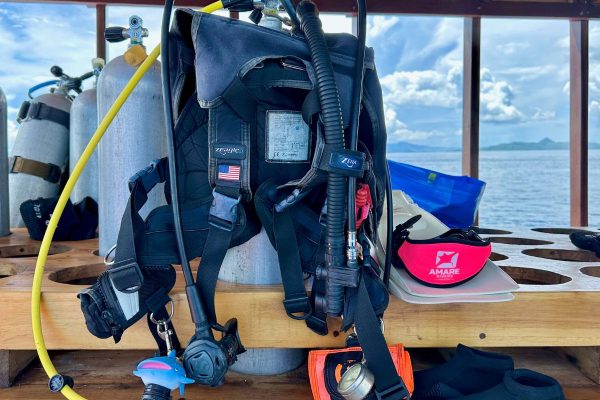
Storage inside the cabins is highly practical but it is not hotel-sized. Soft bags stow perfectly under the wardrobe areas. Furthermore, the dive deck has individual, dedicated gear storage for each diver. Your Komodo liveaboard gear stays securely rigged and ready to go between dives on the dive deck, meaning you will never have to carry wet scuba equipment back into your air-conditioned cabin.
The maximum capacity for the vessel is only 10 guests across all cabins, ensuring an intimate, uncrowded experience. Unless you specifically book a shared spot on an open departure, you will not be sharing your cabin space with strangers.
9. Frequently Asked Questions (FAQs)
To ensure your Komodo liveaboard packing list is absolutely bulletproof, here are the most common questions we receive from divers preparing for their trip.
Do I need to bring my own BCD and regulator to a Komodo liveaboard?
Not necessarily, though it is recommended. The Maria Seascape has highly maintained BCDs and regulators available on board upon request. However, most frequent divers prefer bringing their own Komodo liveaboard gear for the sake of familiarity and exact fit, which is crucial on multi-dive days in strong currents. If you are renting, just confirm your sizing with the dive center well in advance.
What wetsuit thickness do I need for Komodo diving?
A 3mm full-length wetsuit is the absolute standard. Do not bring a shorty. Komodo experiences dramatic cold water upwellings, particularly at southern sites like Manta Alley, and even at northern sites like Castle Rock. Thermoclines can suddenly drop the water temperature down to 24°C (75°F) at depth, even during the peak dry months of June and July. A full 3mm suit also provides essential protection against stinging hydroids and accidental coral scrapes.
Is seasickness common on Komodo liveaboard trips?
It can be, particularly for those prone to motion sickness. The initial crossing from Labuan Bajo to the park takes around two hours, and the swell can be moderate. If you are wondering what to bring on a Komodo liveaboard for health, seasickness medication is top of the list. Take Dramamine or Stugeron 30 to 60 minutes before the boat departs the harbor.
What diving certification do I need for a Komodo liveaboard?
An SSI Open Water or PADI Open Water certification is the absolute minimum requirement to join a departure. However, to truly enjoy Komodo safely, an Advanced Adventurer (or Advanced Open Water) certification is highly recommended. Famous sites like Batu Bolong, Crystal Rock, and the Cauldron feature incredible marine life at depths well below 18 meters (the standard Open Water limit). An advanced certification allows you to dive these sites properly and safely handle the currents.
Can I do a day trip instead of a liveaboard?
Yes! If you find that sleeping on a boat isn’t for you, or if you are short on time, you can still experience the magic of the park. Review our dedicated Komodo day trips page for fast-boat options that return to Labuan Bajo every evening. However, remember that a liveaboard allows you to reach remote sites before the day-trip crowds arrive.
When is the best time to pack for this trip?
The weather dictates your Komodo liveaboard packing list. The dry season runs from May to October, offering incredible visibility but slightly cooler waters and rougher surface crossings. The rainy season (December to March) offers warmer water and calmer seas, particularly in the south. For a detailed breakdown of seasonality, check out our comprehensive blog on the best months to dive Komodo.
Should I pack insect repellent?
Yes. While mosquitoes are not usually a major issue out on the open ocean while the boat is moving, they can be present when the boat anchors in sheltered bays near the islands at night. A small bottle of DEET-free tropical insect repellent is a smart addition to your Komodo liveaboard packing list.
Are drones allowed on the liveaboard?
Yes, you can bring a drone as part of your Komodo liveaboard gear, but you must fly it responsibly. Komodo National Park has specific regulations regarding drone usage, particularly near the islands where the Komodo dragons live and near ranger stations. Always ask the cruise director for permission before launching from the top deck, as sudden boat movements or rigging can easily cause a crash.
Ready to pack your bags?
Preparing your Komodo liveaboard packing list doesn’t have to be stressful. Stick to the essentials: reliable dive gear, sun protection, necessary documents, and a minimalist wardrobe.
If you still have specific questions about what to bring on a Komodo liveaboard or need to double-check rental equipment availability for an upcoming trip, send our team a message on WhatsApp before you travel. We are based right here in Labuan Bajo and will give you straightforward, honest advice to ensure your dive safari is the trip of a lifetime.


Pingback: Ultimate Komodo Liveaboard Experience: 4 Days on Maria Seascape is Amazing
That was amazing