
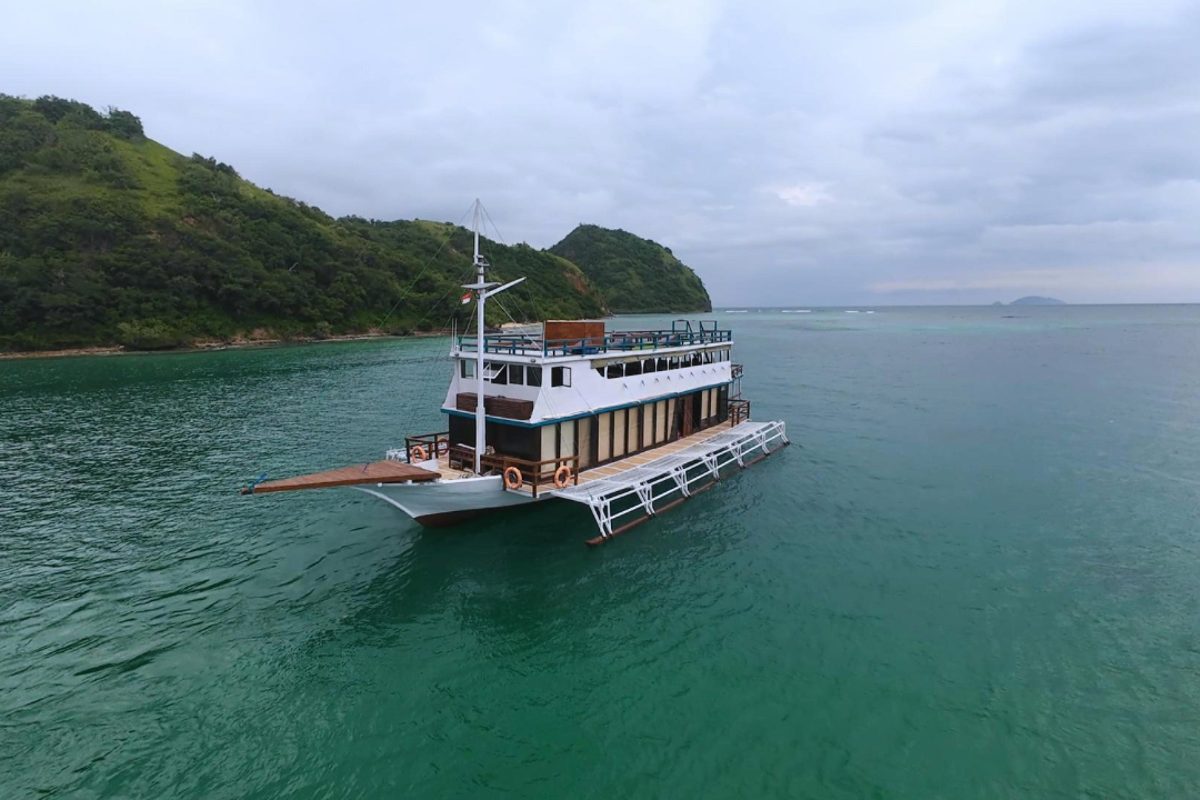
One of the most common questions we receive from first-time liveaboard guests is: how can I experience safe liveaboard diving Komodo? It is a necessary question. Komodo National Park has a well-deserved reputation for strong, sweeping currents, and those currents are a daily reality. Famous dive sites like Castle Rock in full tidal flow, or the channel drift at Manta Alley, are not trivial environments. The very conditions that make Komodo one of the most biodiverse marine habitats on earth are the same conditions that require respect, experience, and rigorous safety protocols. If you are planning a trip, understanding how we manage safe liveaboard diving Komodo is the first step to a secure and unforgettable adventure. On Maria Seascape, safety is the foundation of every itinerary we run.
Site Briefings: Essential for Komodo Diving Safety
Every single dive on Maria Seascape begins with a detailed, site-specific safety briefing. We do not run generic “watch your buoyancy and follow your guide” briefings. Instead, before anyone gears up, our divemasters gather guests around the briefing whiteboard to map out the dive in detail. This meticulous preparation is what guarantees Komodo diving safety even at current-exposed sites.
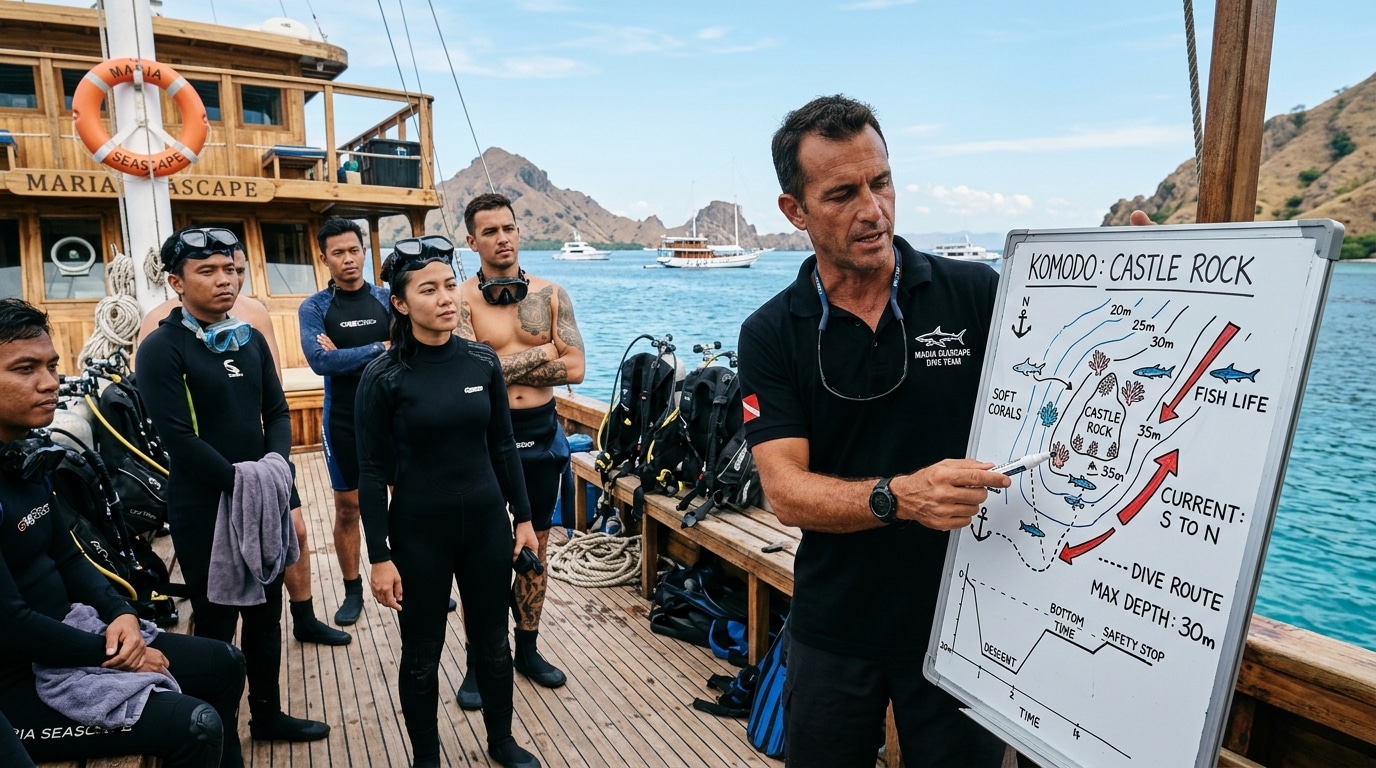
Our briefings cover: current direction and strength at the exact time of entry, the precise entry method (whether a back-roll from our speedboats, a giant stride, or a rapid negative entry), the underwater topography and planned route, depth profiles, emergency procedures, and the specific abort signals should conditions shift. Crucially, Komodo dive sites change by the hour. A site like Castle Rock at slack tide is a calm, serene reef; two hours later, as the tide rises, it becomes a high-velocity drift dive. We brief for the conditions present at the moment of entry, ensuring your safety is managed in real-time.
Guide Ratios: A Key Component of Maria Seascape Safety
To maintain absolute control and visual contact underwater, Maria Seascape operates with a strict, non-negotiable ratio of maximum 4 divers per guide. While the industry standard in less demanding waters is often 6:1 or 8:1, the dynamic nature of Komodo requires a much closer eye. Maintaining this low ratio is how we implement Maria Seascape safety standards in the water.
This ratio is a cornerstone of liveaboard dive safety Indonesia. In a drift environment, a guide must be able to see every diver in their group at all times. If a guest experiences a minor issue, such as a leaking mask or ear equalization trouble, the guide can assist them immediately without losing track of the other three divers. By limiting Maria Seascape to a maximum of 10 guests, we ensure that 2 to 3 professional guides are always in the water. We prioritize safety and guest attention over maximizing guest numbers.
Our Standards for Safe Liveaboard Diving Komodo
No safety protocol is complete without top-tier equipment. All rental gear on board Maria Seascape—including BCDs, regulators, wetsuits, and dive computers—is sourced from premium brands and undergoes regular, documented servicing. Tanks are pressure-tested and filled using clean, regularly monitored compressors. If you are bringing your own gear, we request that your regulators have been serviced within the last 12 months. A malfunction at 25 meters in a strong current is a serious situation, and prevention is our priority when running safe liveaboard diving Komodo trips.
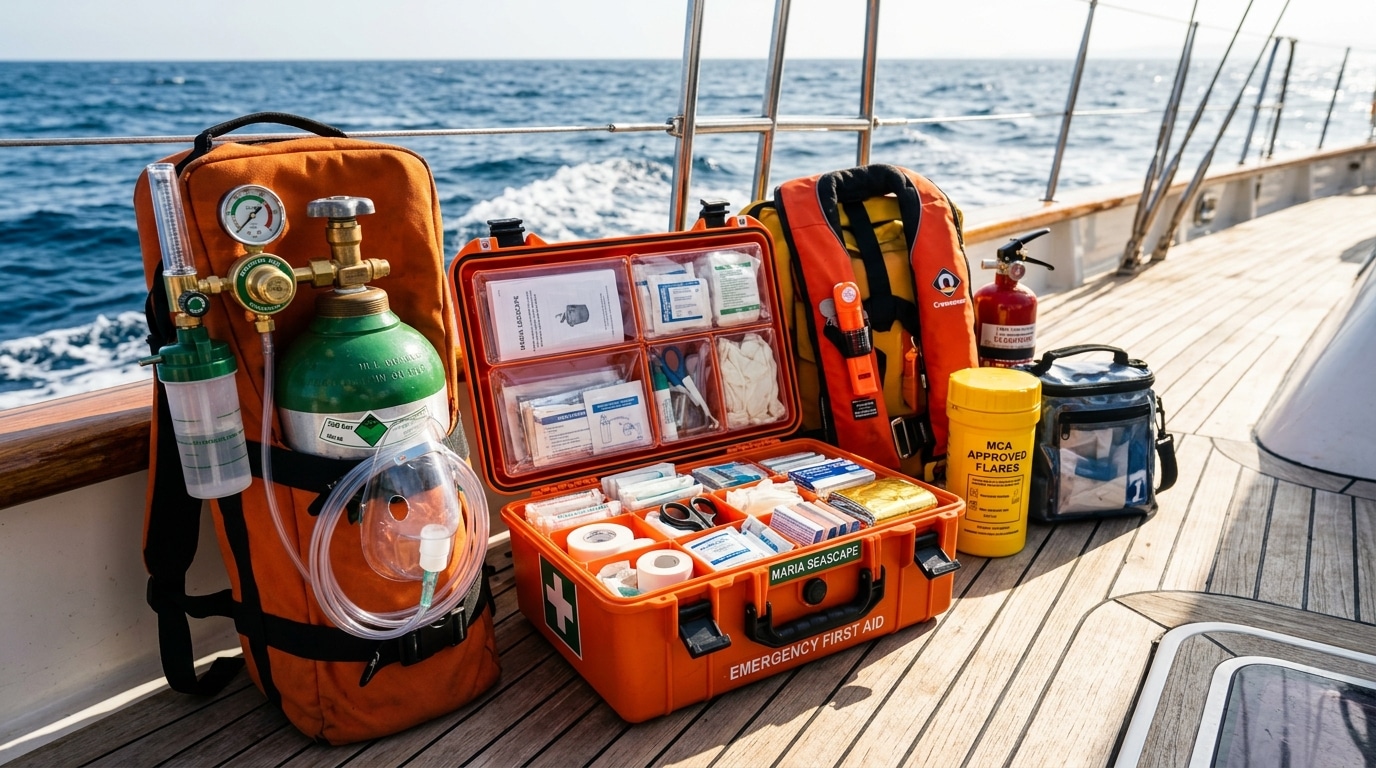
For guests preparing their gear, checking our ultimate liveaboard packing list is highly recommended. It details the essential personal items—such as dive torches and reef hooks—that contribute to a comfortable and secure trip. We also carry back-up regulators, BCDs, and computers on board to ensure that a gear failure does not interrupt your diving holiday.
Dive Insurance: Essential Protection for Remote Diving
We require all guests on Maria Seascape to carry valid dive-specific insurance (such as DAN or DiveAssure) or explicitly sign a waiver acknowledging the risks. General travel insurance policies rarely cover decompression illness, hyperbaric chamber treatments, or emergency maritime evacuations. In the event of a diving emergency, the nearest hyperbaric chamber is located in Labuan Bajo, but severe cases may require evacuation to Bali. Having dedicated dive insurance ensures that medical decisions can be made swiftly without financial delay, ensuring liveaboard dive safety Indonesia remains a top priority.
Experience Requirements: Respecting the Water
We do not bend our experience requirements. Scuba diving in Komodo is incredibly rewarding, but it is not a place for ego. If a guest’s certification level or logged experience does not match the conditions of a specific site, our team will arrange a safer alternative or ask the guest to sit the dive out. We recommend the SSI Advanced Adventurer course for our longer itineraries, as the training in deep diving, navigation, and current management is invaluable for sites like Manta Alley.
For newer divers or those who wish to build their confidence before committing to a multi-day cruise, we suggest joining our daily dive trips. These trips focus on the calmer, protected reefs of central Komodo, providing a perfect stepping stone under the supervision of our experienced instructors.
Strict Adherence to Komodo National Park Regulations
All operations on Maria Seascape comply fully with the Balai Taman Nasional Komodo (BTNK) regulations. This includes securing park permits, respecting marine protected zones, and following strict wildlife interaction guidelines. We enforce a strict “no-touch” policy for coral and marine life, maintain respectful distances from manta rays and sharks, and ensure our boat anchors only in designated areas. Protecting the ecosystem is just as vital as protecting our divers.
What We Expect from Our Guests
Safety is a shared responsibility. We ask our guests to:
-
- Dive within their personal limits and certification levels.
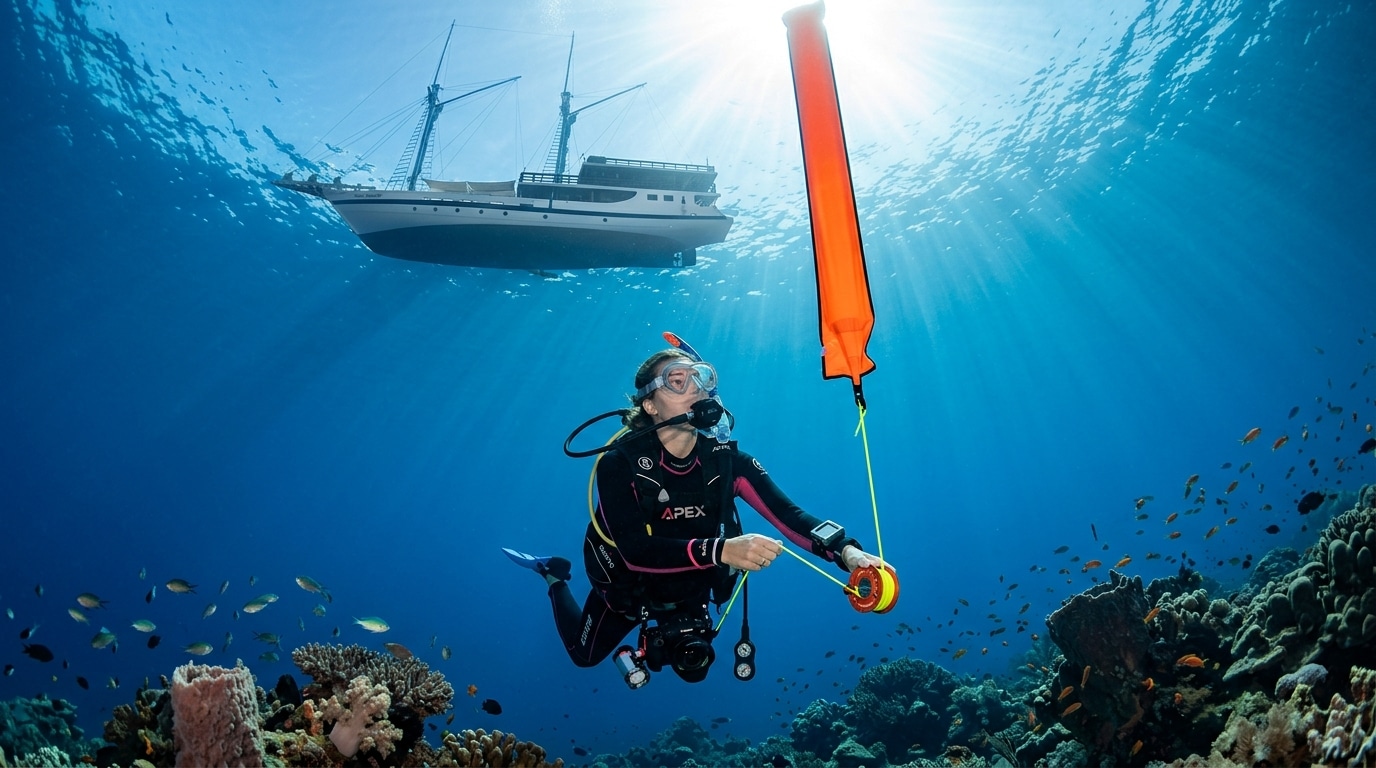
- Carry a personal surface marker buoy (SMB) and know how to deploy it (mandatory on all drifts).
- Disclose all relevant medical history honestly prior to boarding.
- Listen closely to briefings and follow the divemaster’s instructions in the water.
