
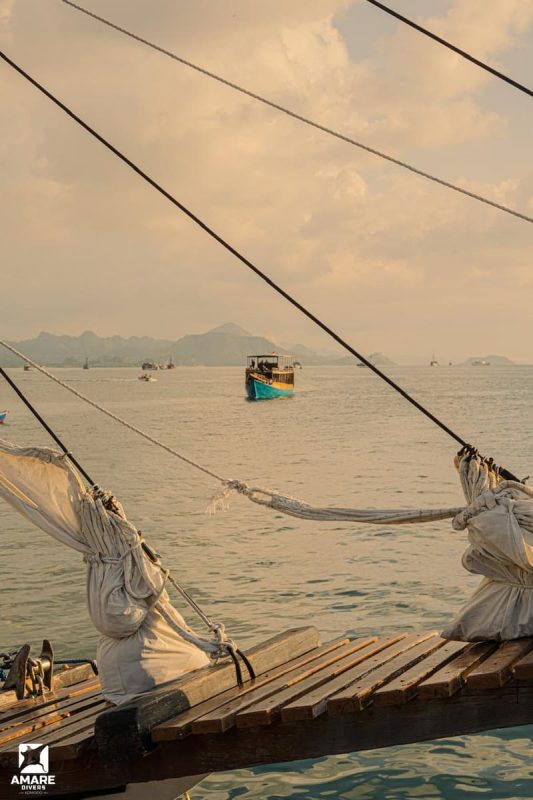
Many divers hesitate when they hear the words rainy season. In Komodo, that hesitation is often unnecessary. December and January offer a very different diving experience compared to the dry months — and for the right diver, it can be a great time to be underwater.
Here’s what rainy-season diving in Komodo is really like, based on day-to-day conditions, not assumptions.
What “Rainy Season” Actually Means in Komodo
Rainy season in Komodo does not mean constant rain or cancelled dive days.
Typical patterns include:
- Short rain showers, often overnight or early morning
- Overcast skies rather than heavy storms
- Calm sea conditions on many days
Rainfall affects the surface far more than the underwater environment. Once you descend, conditions are often stable and comfortable.
Visibility During the Rainy Season
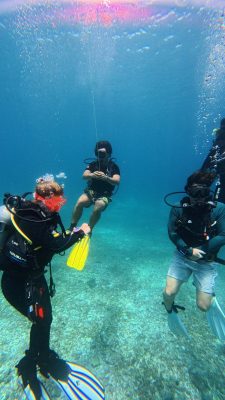
Visibility can vary more than in peak dry season, but it is rarely poor.
What divers usually see:
- Average visibility around 15–25 meters
- Clearer conditions at certain central and southern sites
- Softer light underwater, which many photographers enjoy
Plankton levels can increase after rainfall, which may reduce visibility slightly — but this also attracts marine life.
Currents: Softer, More Manageable Days
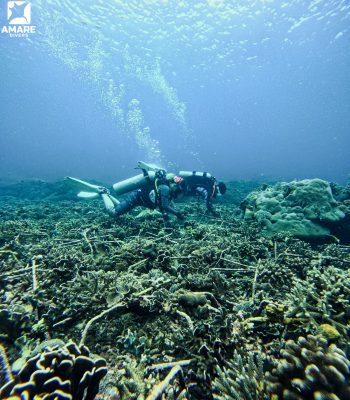
One of the biggest advantages of December–January diving is current behavior.
Compared to mid-year months:
- Many sites experience gentler currents
- Drift dives feel more relaxed
- Entry and exits are often easier
This makes the rainy season suitable for:
- Divers returning after a break
- Those still building confidence with currents
- Longer, calmer bottom times
Currents still exist in Komodo — they are just more predictable and forgiving on many days.
Marine Life: Still Excellent, Just Different
Rainy season does not mean less marine life.
Divers regularly encounter:
- Reef sharks
- Turtles
- Large schools of reef fish
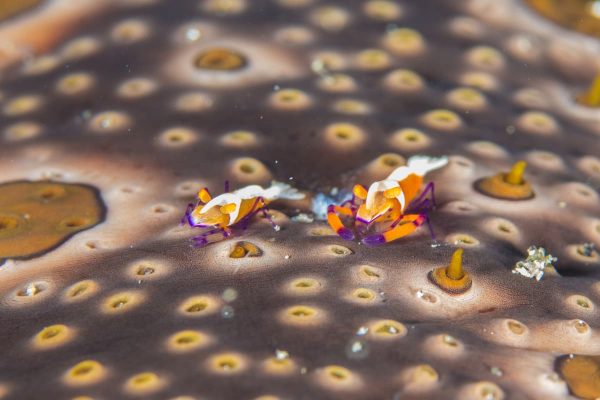
- Macro life such as nudibranchs, shrimps, and frogfish
Plankton-rich water can increase chances of pelagic encounters, and macro lovers often enjoy this period due to calmer dives and focused observation.
Water Temperature and Exposure Protection
Water temperature during December and January is usually comfortable:
- Around 26–28°C
- Slightly warmer than some dry-season months
A 3mm wetsuit is enough for most divers. Those who chill easily may prefer 5mm for longer dives or multiple days in a row.
Is Rainy Season Diving Right for You?
Rainy-season diving in Komodo suits:
- Divers who prefer fun diving calmer conditions
- Photographers who like soft light and fewer crowds
- Travelers who enjoy a slower pace
- Refresher or continuing education
It may not suit:
- Those seeking strong current drift dives every day
- Travelers with very tight schedules who dislike weather variability
Fewer Crowds, More Space

December and January are quieter months in Labuan Bajo.
This often means:
- Smaller dive groups
- More space on the boat
- A relaxed atmosphere above and below water
For many divers, this alone makes rainy season diving appealing.
Final Thoughts
Rainy season diving in Komodo is not about perfect blue skies — it’s about balance, calm conditions, and quality time underwater.
If you’re planning to dive in January and want advice on the best sites and daily conditions, explore our daily fun diving trips in Komodo or contact the Amare Divers team for personalized recommendations.

