
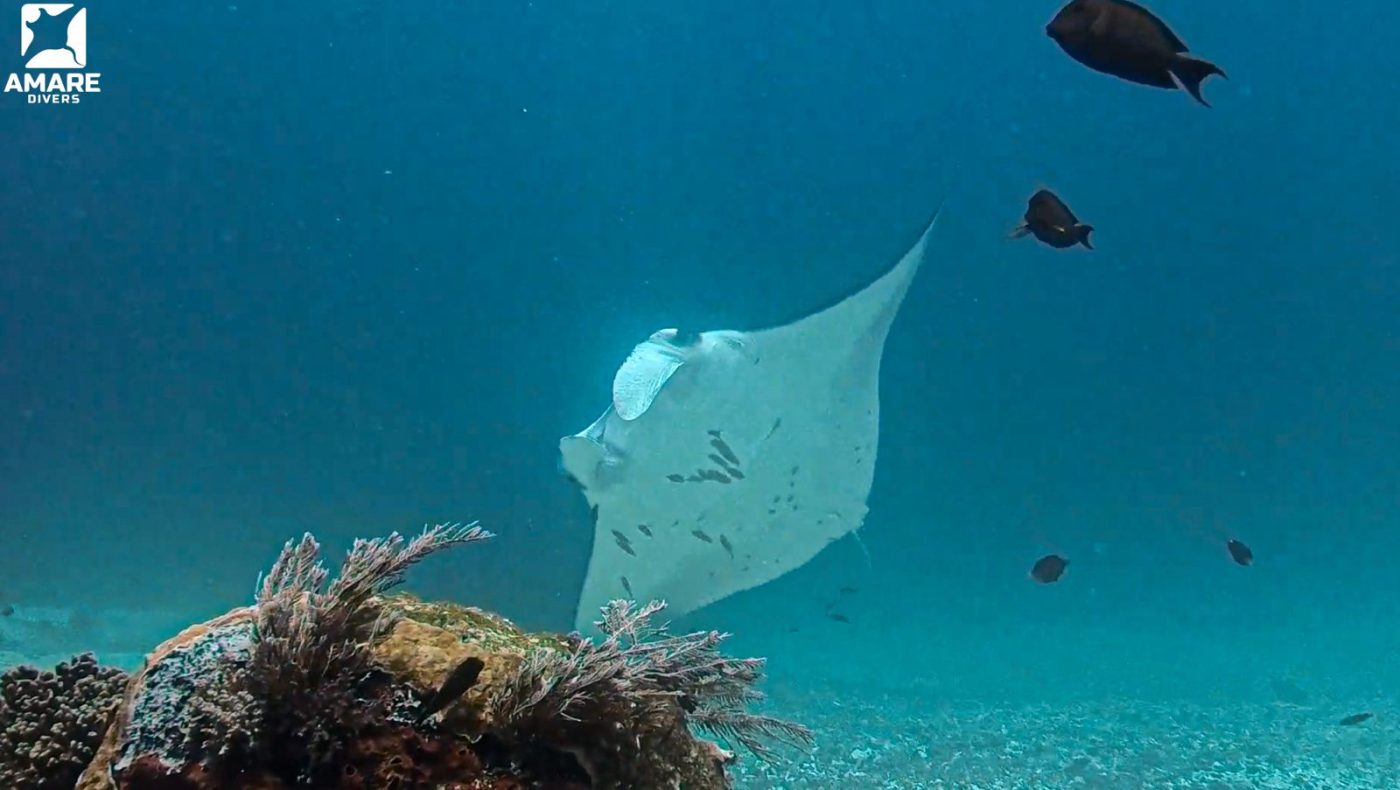
Diving with manta rays is one of the main reasons people travel to Komodo and if you’ve ever typed “diving with manta rays in Komodo” into Google, you already know how magnetic this experience sounds. But here’s the thing most blogs won’t tell you: it’s even better in real life, and not for the reasons you expect.
We’ve been guiding dives in Komodo for years, and we still notice the same moment every single time. Guests step onto the boat carrying excitement, expectations, and honestly a bit of pressure. They’ve seen the videos. Giant manta rays gliding through blue water. Divers hovering perfectly still. Everything looks cinematic.
But diving with manta rays in Komodo isn’t cinematic. It’s not staged. It doesn’t wait for you.
It happens whether you’re there or not.
And that’s exactly why, when it finally unfolds in front of you, it doesn’t feel like a show—it feels like you’ve stepped into something real. Something already happening. Something that doesn’t need you but somehow allows you in.
That’s the difference. And that’s why diving with manta rays in Komodo stays with people long after the trip ends.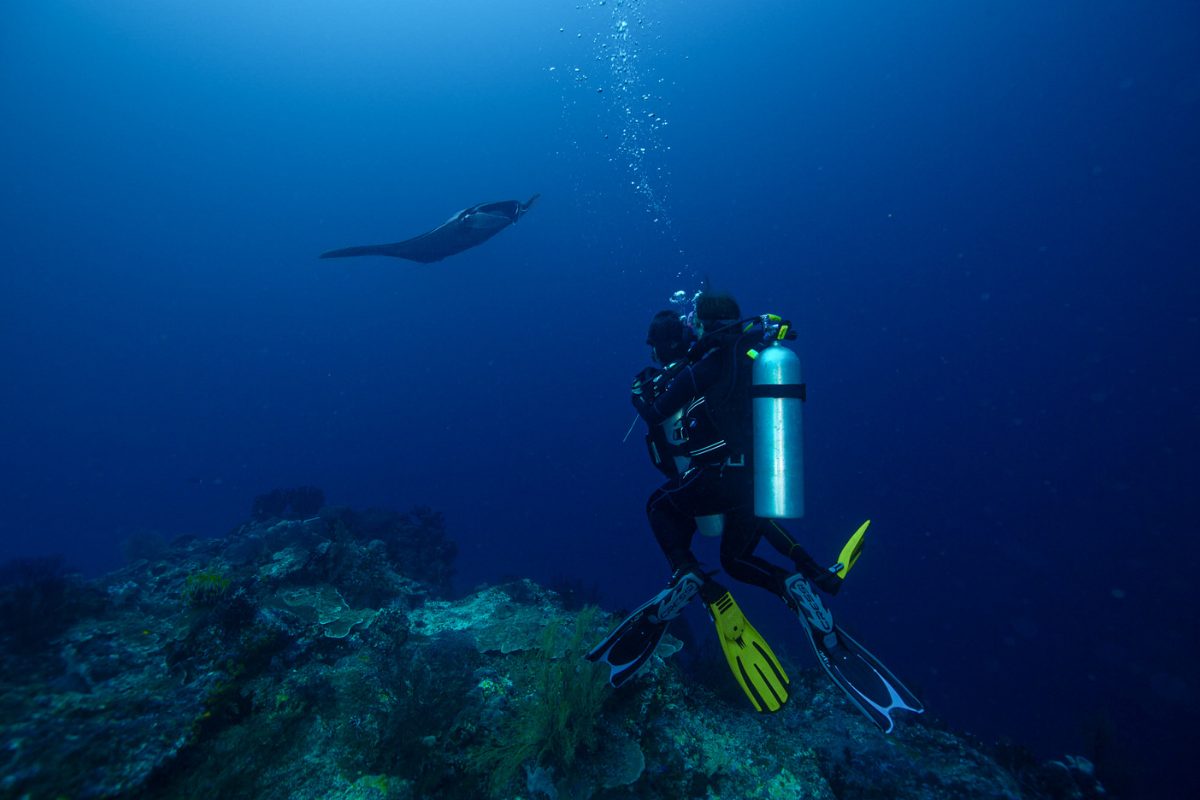
Where You See Mantas in Komodo
Let’s talk about the place everyone mentions: Manta Point.
If you’re planning diving with manta rays in Komodo, this is almost always part of your itinerary. But not because it’s trendy or overhyped because it works.
Here’s how I usually explain it during the dive briefing.
Manta Point is a cleaning station. It’s a specific area where manta rays come to get cleaned by smaller fish. These fish remove parasites from their skin, gills, and even inside their mouths. It’s not optional behavior for mantas it’s essential.
So they come back.
Again. And again.
That’s why diving with manta rays in Komodo feels more consistent here than in many other destinations. You’re not chasing wildlife across open ocean hoping for a lucky encounter. You’re positioning yourself in a place where manta rays already have a reason to be.
On the right tide, when the current is just right—not too strong, not too weak—you can watch mantas circle the same cleaning station repeatedly. Slow loops. Wide turns. Sometimes hovering just above the reef.
It’s calm. Predictable in rhythm, but never boring.
Yes, there are other dive sites in Komodo where manta rays show up. Sometimes unexpectedly. Sometimes in bigger numbers. But when people talk about reliable diving with manta rays in Komodo, Manta Point is the name that keeps coming back.
And after you dive it once, you’ll understand why.
What Manta Ray Diving in Komodo Feels Like
Here’s something most first-time divers don’t expect:
The beginning can feel quiet.
You descend into the water. You equalize. You check your buoyancy.
Then your guide signals you toward a spot along the reef. You settle in. Find stability. Control your breathing.
And then,nothing.
No immediate action. No dramatic entrance. No manta rays rushing toward you.
Just current. Breath. Blue water.
This is the moment where many divers get restless. They start scanning too quickly. Moving too much. Expecting something to happen instantly. But this is where diving with manta rays actually begins. Because this kind of dive isn’t about movement. It’s about stillness.The more you slow down, the more the ocean starts to reveal itself. The current becomes softer. Your breathing becomes quieter. Your awareness expands.
And then, usually when you stop actively looking, you see it; a shape forming in the distance. Wide. Smooth. Effortless.
A manta ray, appearing not dramatically but naturally.
Manta Behavior
There’s this expectation that diving with manta rays in Komodo will feel intense.
Big moment. Big adrenaline. Something dramatic.
But what actually happens is the opposite and that’s what makes it powerful.
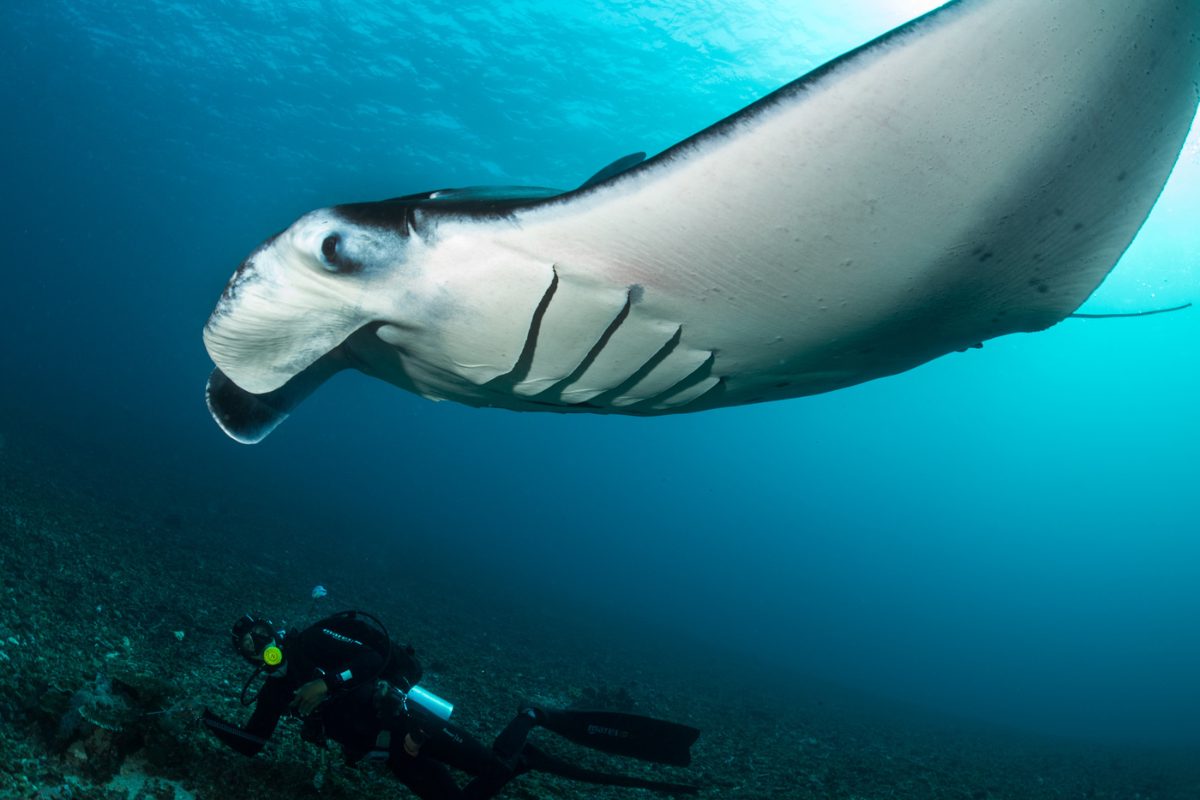
The manta doesn’t rush in. It doesn’t react to you. It doesn’t change its behavior. It simply continues; Gliding, circling, returning.
And if you’ve done it right if you’ve stayed calm, stayed low, stayed present, you’ll notice something subtle.
The distance starts to close.
Not because you swam closer.
But because the manta chose a path that brought it near you.
This is where diving with manta rays in Komodo becomes something deeper than just “seeing wildlife.” It becomes a shared moment. You’re not interacting in a forced way, you’re coexisting in the same space.
I’ve had dives where one manta circled us for almost the entire dive time. Just looping back again and again, as if we were part of the reef.
I’ve also had dives where multiple mantas appeared one after another; five, six, even more, each one moving through like a quiet procession.
Every dive is different. And that unpredictability is exactly what makes diving with manta rays in Komodo so addictive.
How to Dive with Manta Rays
Why Chasing Never Works
It’s natural—you see a manta and want to get closer.
But this is where most divers get it wrong.
The moment you chase them, you lose the experience.
The moment you chase them, you lose the experience.
The moment you chase them, you lose the experience.
Mantas don’t react dramatically. They just drift away quietly. And once they do, that moment is gone.
Understanding Manta Behavior
If you slow down, you’ll start to notice how manta rays in Komodo actually move.
They glide in wide circles. They hover at cleaning stations. They move with a kind of calm that feels almost effortless.
When there’s more than one, it’s even more interesting. They don’t compete or collide—they simply share the space, each following its own path.
Let the Experience Come to You
Diving with manta rays in Komodo isn’t about getting closer. It’s about being still enough for them to come to you.
When you stop chasing, you start noticing more.
When you stay calm, they stay longer.
When you give space, they come closer.
You begin to read their movement—where they’ll turn, when they’ll circle back, how near they might pass.
And that’s when the dive shifts from just seeing to actually experiencing.
Simple Habits That Make a Difference
The best encounters come from doing less, not more:
- Stay low and stable
- Move slowly
- Keep your distance
- Let the manta decide
I’ve seen divers barely move and have mantas pass just a few meters away.
Not because they tried harder.
But because they didn’t try at all.
That’s the quiet rule of diving with manta rays in Komodo:
the less you force it, the better it becomes.
Best Time to See Mantas
This is one of the most searched questions but the honest answer might surprise you.
There is no single “best month” for diving with manta rays in Komodo.
Mantas are here year-round.
What actually determines your experience is:
- Tide timing
- Current strength and direction
- Daily dive site selection
That’s why local expertise matters so much, experienced dive operators don’t follow rigid schedules, they adapt to conditions.
Every day is different. Every dive plan is adjusted.
And that’s why diving with manta rays in Komodo often feels more consistent than in other places. It’s not luck. It’s understanding.
Why Manta Diving in Komodo Stands Out
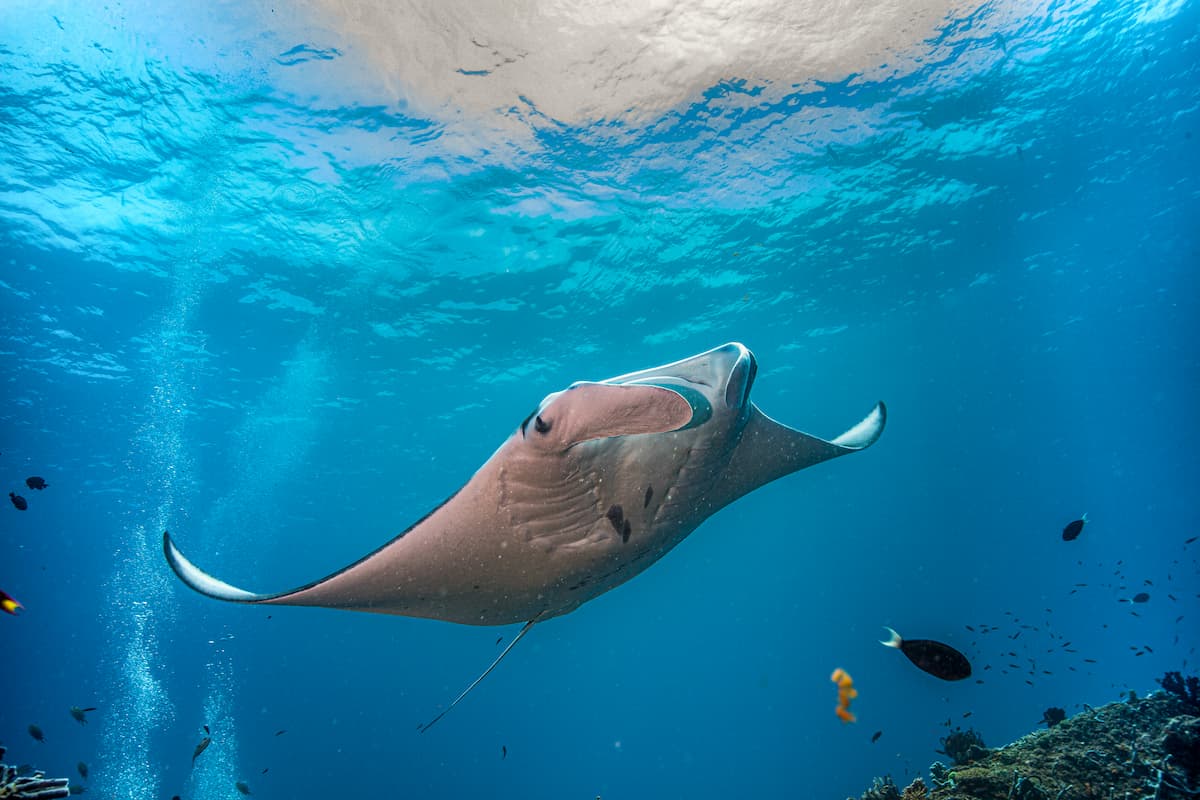
There are many destinations offering diving with manta rays. Maldives, Hawaii, Raja Ampat. All incredible in their own way.
But Komodo stands out and not just because of reputation.
Here’s why:
Longer encounters
Cleaning stations mean mantas stay longer, giving you more time underwater with them.
Natural behavior
No feeding. No artificial attraction. What you see is real, undisturbed behavior.
Reliable sites
With the right guide and conditions, your chances of meaningful encounters are high.
Diving with manta rays in Komodo is not about chasing rare moments. It’s about positioning yourself where those moments naturally happen.
Long after your dive ends, something stays with you.
Maybe it’s the way a manta ray turns effortlessly against the current, maybe it’s the silence when everything else fades away.
Or maybe it’s the realization that you were part of something completely natural—and didn’t interrupt it.
That’s what diving with manta rays in Komodo gives you.
Not just a sighting. Not just content for Instagram. But a feeling.
And it’s surprisingly hard to put into words until you experience it yourself.
If you’re planning your trip and want to experience diving with manta rays in Komodo the way it’s meant to be calm, natural, and guided by people who know these waters—check current conditions and trip availability with Amare Divers.


Pingback: Diving Komodo National Park – 2026 Guide