
Komodo National Park, established in 1980 and designated a UNESCO World Heritage site in 1991, encompasses a group of islands in Indonesia’s Lesser Sunda chain. While renowned for its terrestrial wildlife, including the Komodo dragon, the park’s marine environment is equally significant. Covering over 1,733 square kilometers, with two-thirds being marine areas, it forms part of the Coral Triangle—the global epicenter of marine biodiversity. The park hosts more than 260 species of coral and over 1,000 species of tropical fish, along with diverse marine life such as manta rays, sharks, turtles, and rare mammals like the dugong.
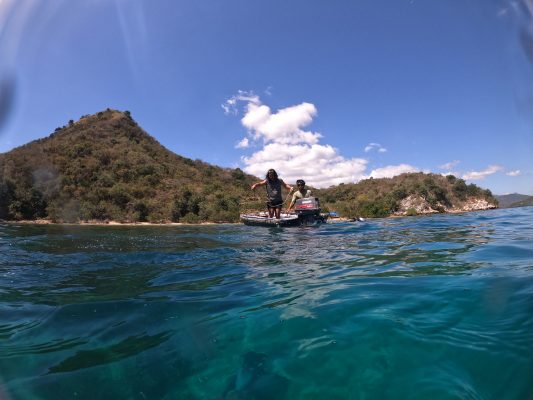
These ecosystems support nutrient-rich waters driven by strong currents, fostering high productivity but also vulnerability to environmental stressors.
Indonesia, as the world’s largest archipelago with more than 17,000 islands and a coastline exceeding 50,000 kilometers, holds approximately 18% of global coral reefs, totaling around 20,000 square kilometers. Situated at the heart of the Coral Triangle, Indonesian reefs boast exceptional diversity, including 574 coral species. They play critical roles in coastal protection, fisheries, and tourism, but face threats from climate change, overfishing, pollution, and extreme weather events. Restoration efforts, such as those in Komodo, are part of a broader national initiative, with over 500 documented coral restoration projects aimed at rehabilitating degraded sites.
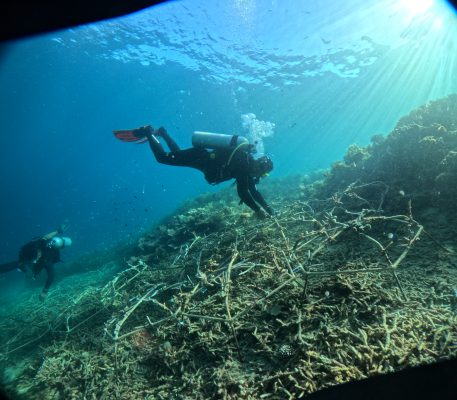
In this context, Amare Divers collaborated with Komodo National Park headquarters on a coral planting project at Strawberry Rock from August 4 to 6, 2025. Strawberry Rock, a dive site within the park, experienced significant damage from severe weather the previous year, resulting in loss of coral cover and habitat disruption. Such events highlight the fragility of these reefs, where natural recovery can span decades without human intervention.
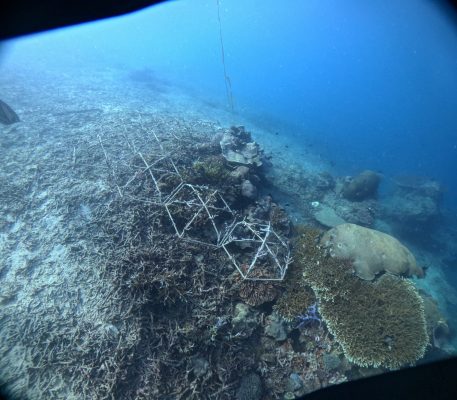
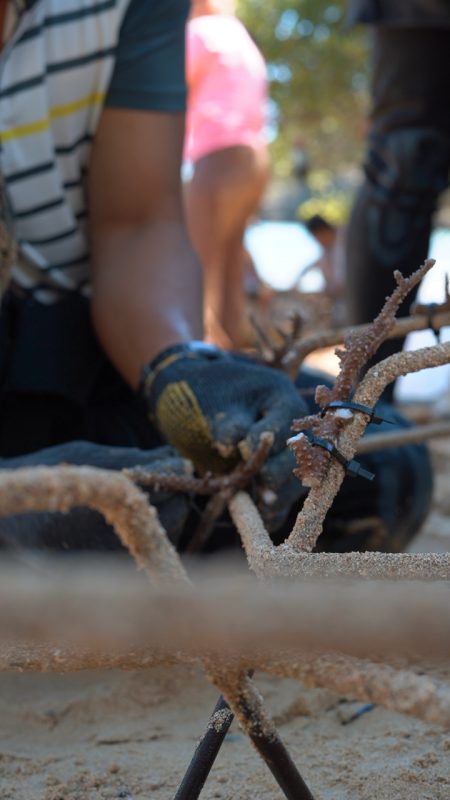
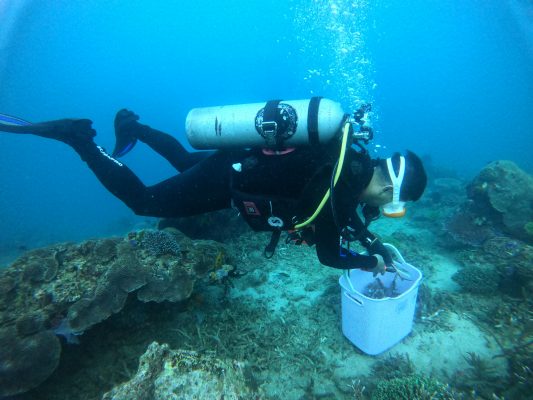
Over the three days, participants collected coral fragments from resilient nearby reefs, selecting species adapted to the site’s strong currents. With assistance from local island communities—whose knowledge of local conditions informed placement strategies—the team attached more than 500 fragments to the damaged substrate using ties and epoxy. This method promotes regrowth by providing stable anchors for new coral colonies. Ongoing monitoring will assess survival rates and adjust approaches as needed, contributing to long-term reef health.
For those interested in Komodo’s marine ecosystems, opportunities exist to participate in similar initiatives or explore the park through diving. Such activities support conservation while offering insights into Indonesia’s vital coral habitats.

