
Getting your open water certification in Labuan Bajo is not the same as getting certified at a swimming pool in a landlocked city. By day three, your qualifying dives are happening inside Komodo National Park—one of the most biodiverse marine ecosystems on earth.
If you choose an SSI Open Water course Labuan Bajo program, you are fast-tracking your access to world-class reefs. This isn’t just a marketing line. The park sits at the exact junction of Indian Ocean and Pacific Ocean currents. This unique marine meeting point produces cold, nutrient-dense water updrafts that support a marine life density even experienced divers are not prepared for.
This guide covers exactly what the course involves, what each day looks like when you choose to learn to dive Komodo with Amare Divers, and how to maximize your time in the water.

Why Get Certified in Labuan Bajo?
Many travelers wonder if they should complete their scuba diving course Labuan Bajo training locally or do it before they travel. Taking your course here means your very first breaths underwater happen in clear, tropical waters teeming with life.
Instead of staring at tiled pool walls, your training platform transitions rapidly into a thriving ecosystem. Choosing to get your Open Water certification Komodo means you are earning your credentials in an environment where sea turtles, reef sharks, and colorful schools of anthias are standard sights rather than rare anomalies.
What is the SSI Open Water Course?
SSI (Scuba Schools International) is one of the two major internationally recognized scuba certification agencies globally, alongside PADI. An SSI certification is fully recognized and accepted at every dive center, resort, and liveaboard worldwide. There is no practical difference between SSI and PADI regarding safety standards or recognition; both strictly follow the global guidelines set by the World Recreational Scuba Training Council (WRSTC).
The typical SSI Open Water course Labuan Bajo consists of three core components:
-
Digital Theory: Understanding the physics of diving, how pressure affects the human body, equipment functionality, dive planning, environmental awareness, and emergency safety procedures.
-
Confined Water Sessions: Skill development in a controlled, shallow environment—either a dedicated pool or a highly sheltered, calm bay—before entering deeper water.
-
Open Water Dives: Four distinct qualifying open water dives conducted in the ocean under the direct supervision of your certified instructor.
The total course time spans 2 to 3 days, depending entirely on whether you complete your academic digital learning modules before arriving at the dive shop.
Day-by-Day Course Breakdown
Day 1: Digital Theory and Academics
The modern learning process is highly streamlined thanks to the SSI MyApp platform. This digital portal guides you through all critical modules, including pressure dynamics, buoyancy physics, breathing gas properties, and safety protocols. Knowledge reviews at the end of each section culminate in a final multiple-choice exam.
Most students complete the digital theory portion in 3 to 4 hours of focused effort. We highly recommend completing this digital learning online at home before traveling. Doing so allows you to arrive on Day 1 ready for the water, effectively saving you a full day of classroom study in port. Your instructor will simply review your digital record, clarify any missed questions, and take you straight to your confined gear fitting.
Day 2: Confined Water Training and Dives 1 & 2
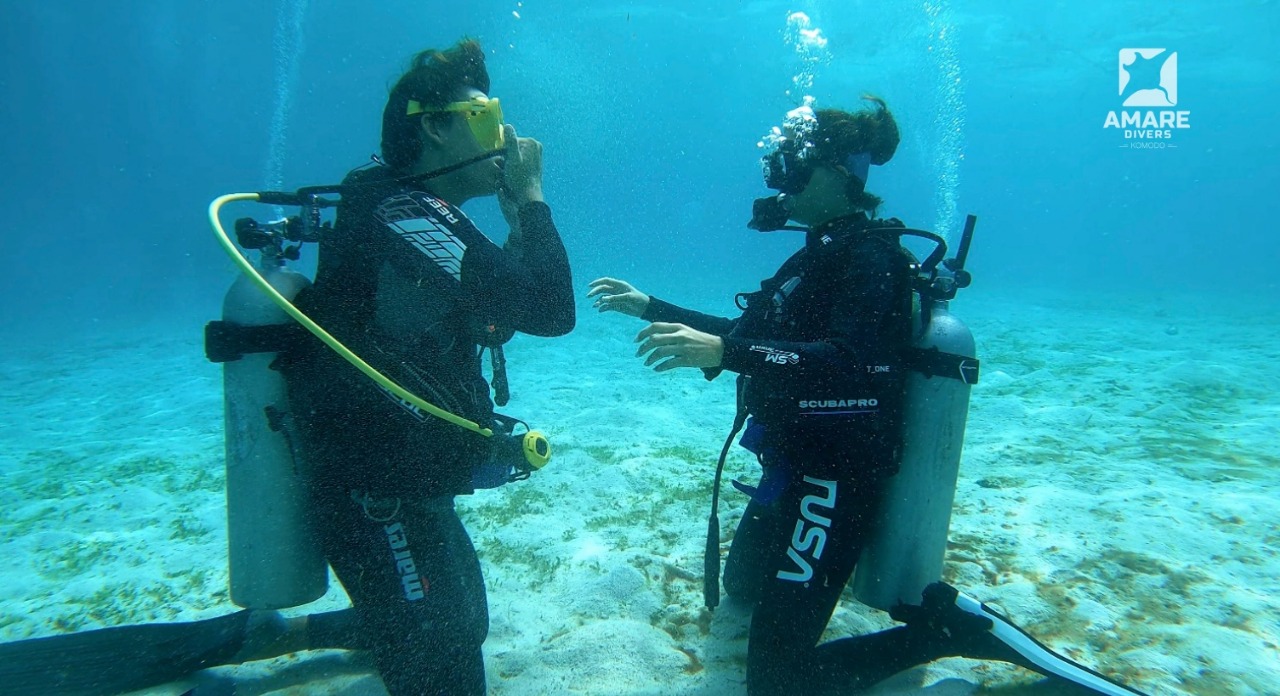
Confined water training happens in shallow, highly controlled conditions. The primary goal is to develop automatic physical responses to situations that can initially feel disorienting. By building muscle memory in the shallows, your brain remains calm and focused when you transition onto an actual coral reef.
During this session, you will master several fundamental skills:
-
Mask Clearing and Removal: Learning how to clear water out of your mask effortlessly while submerged.
-
Regulator Recovery: Practicing how to locate and clear your primary regulator if it is ever knocked out of your mouth.
-
Buoyancy Control: Fine-tuning your lung volume to hover weightlessly, perform controlled descents, and execute safe ascents.
-
Underwater Navigation: Learning how to use a physical dive compass alongside natural underwater landmarks.
-
Emergency Ascent Procedures: Practicing a Controlled Emergency Swimming Ascent (CESA) to simulate safe management of an out-of-air scenario.
-
Pre-Dive Buddy Checks: Cultivating the habit of inspecting your dive partner’s gear setup before every single entry.
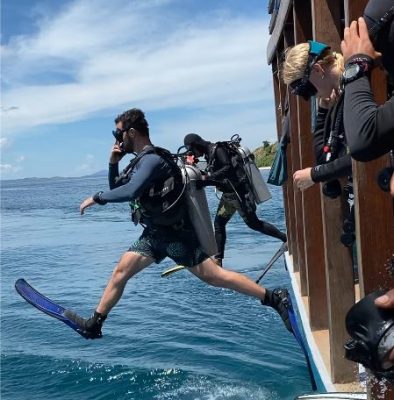
Once your instructor signs off on your confined skills, you will head out by boat for your first two official qualifying dives. These dives take place at sheltered, beginner-friendly sites inside the park, keeping to a maximum depth limit of 12 meters.
Even on these entry-level sites, the marine diversity is staggering. It is highly common to encounter green sea turtles, resting white-tip reef sharks, and vast fields of healthy hard corals on your very first afternoon in the ocean.
Day 3: Open Water Dives 3 & 4 and Graduation

Your final day focuses on executing Dives 3 and 4, where the maximum depth limit extends to 18 meters. By this point, most students have successfully dialed in their breathing rhythm and can focus entirely on enjoying the surrounding environment rather than thinking about their gear.
Dives 3 and 4 are much more exploratory. You will navigate across vibrant sloping reefs, practice advanced hover controls, and learn how to drift gently with mild currents.
Immediately after your instructor logs your final dive and confirms your skill competency, your Open Water certification Komodo credential is generated digitally. It populates inside your SSI MyApp profile instantly, allowing you to book fun dives around the globe without waiting for a plastic card to arrive in the mail.
Course Prerequisites and What to Prepare
Before signing up for your comprehensive scuba diving course Labuan Bajo, ensure you meet the standard safety and operational prerequisites:
-
Prior Experience: None required. This course is designed specifically for complete beginners.
-
Swimming Ability: You must be able to float or tread water comfortably for 10 minutes and complete a continuous 200-meter swim (no time limit, any stroke allowed).
-
Documentation: A valid passport copy is mandatory so the dive center can process your official Komodo National Park entry permits.
-
Medical Fitness: You must complete a standard standard RSTC Medical Questionnaire. If you note any pre-existing cardiovascular, respiratory, or diabetic history, you will need a signed clearance certificate from a physician before breathing underwater.
-
Diving Insurance: We highly recommend securing specialized coverage via Divers Alert Network (DAN) or an equivalent provider, as standard international travel insurance rarely covers specialized hyperbaric medical care.
What’s Next After Your Scuba Diving Course Labuan Bajo?
Earning your entry-level certification is just the starting point. To truly experience what this region has to offer, you will want to progress your skills further.
The SSI Advanced Adventurer Program
The absolute best follow-up to your initial training is the SSI Advanced Adventurer course. This program lets you sample five distinct diving specialties—including Deep Diving and Navigation—over just two days. Most importantly, it extends your legal depth limit to 30 meters.
World-class Komodo sites like Castle Rock, Crystal Rock, and Batu Bolong feature their most dense fish schools, shark action, and vibrant soft corals well below the 18-meter threshold. Upgrading your depth limit ensures you don’t miss out on these deeper aggregations.
Specialty Courses to Consider
If you want to refine specific techniques, several continuing education blocks are highly beneficial for this region:
-
Enriched Air Nitrox: Vital for maximizing your bottom times and reducing physical fatigue, especially during multi-day trips.
-
Waves, Tides & Currents (Drift Diving): Crucial for learning how to safely read and navigate the dynamic currents that make this region famous.
-
Perfect Buoyancy: The ultimate way to lower your air consumption rate, stabilize your underwater photography, and protect delicate coral reefs from accidental contact.
Booking Fun Dives and Liveaboards
Once you have your credentials in hand, you can seamlessly transition into booking [daily dive trips] to check out more of the park’s central and northern highlights. If you want to see the best times of year to catch massive pelagic encounters, browse our guide on the region’s peak [manta season blog]. Planning ahead is key, so make sure to check out our breakdown of the [best months to dive Komodo blog] to time your trip perfectly with optimal visibility and calmer surface conditions.
For the ultimate experience, certified open water divers can step directly onto our luxury [Maria Seascape liveaboard page] itineraries. Spending multiple consecutive days living on board allows you to wake up directly over remote dive sites, beats the day-boat crowds to the water, and lets you log up to 4 incredible dives per day.
Frequently Asked Questions
How long does the SSI Open Water course take in Labuan Bajo?
The course takes exactly 2 to 3 days. If you proactively complete all of your digital theory modules via the SSI MyApp ahead of time, your practical training on-site takes just 2 full days (Day 1 covers confined water and your first two ocean dives; Day 2 completes your final two qualifying dives).
What is the minimum age to learn to dive Komodo?
Children can enroll in the Junior Open Water Diver program starting at age 10. The standard, unrestricted Open Water certification is issued automatically once a diver reaches age 15. There is no maximum age limit, provided you are in good physical health and pass the medical questionnaire.
Is SSI or PADI better for my scuba diving course Labuan Bajo?
Neither is inherently better; they are functional equivalents. Both agencies teach under the exact same global recreational training frameworks. The main benefit of choosing an SSI Open Water course Labuan Bajo is their highly integrated digital app ecosystem, which allows for instant digital certification processing and eco-friendly logbook keeping.
Can I join a liveaboard cruise with just an Open Water certification?
Yes! An Open Water certification fulfills the minimum licensing requirement needed to join the Maria Seascape liveaboard. You will be able to dive every scheduled site safely within your certified 18-meter depth limit. To explore deeper segments of the walls, your onboard instructors can easily help you cross-certify your Advanced Adventurer rating mid-trip.


Pingback: Best Months to Dive Komodo: Ultimate 2026 Guide to Peak Season
Pingback: SSI Courses Komodo: 5 Best Practical Tips for New Year Dives